
A Sculptor Learning to Think Without Resistance
⏱️ 4 min read
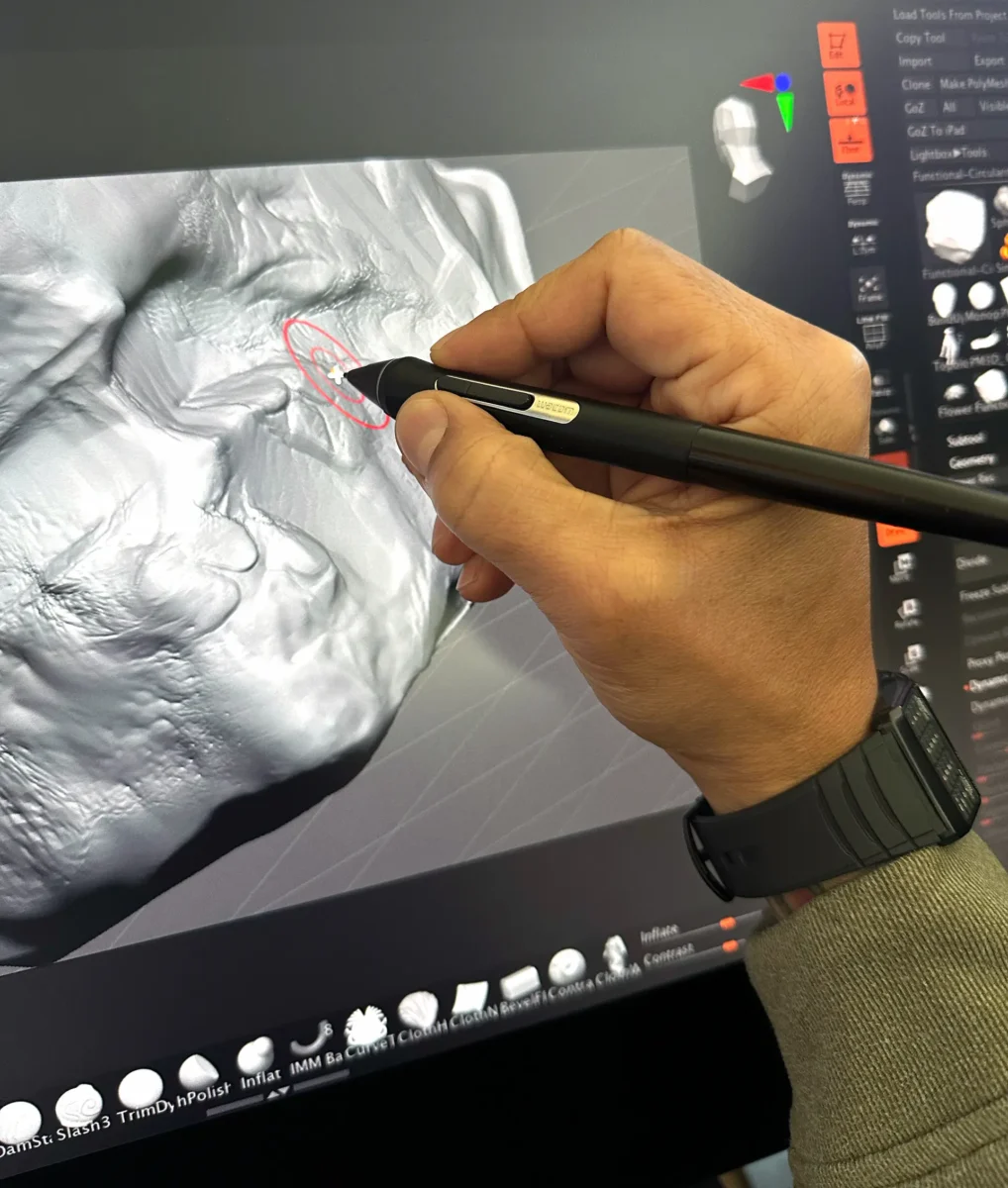
I’ve been spending time learning ZBrush recently, and one thing became clear very quickly—it’s not as separate from traditional sculpting as I first thought.
[Maxon ZBrush: a digital sculpting tool used to model form in a virtual 3D space.]
If anything, it’s forcing me to reconsider parts of my process that I used to take for granted. The discovery of ZBrush wasn’t accidental. I’ve always had an affinity for digital tools—working with programs like Photoshop, Illustrator, and others over the years. But it was my interest in medallions and bronze relief sculpture that made me look at it more seriously.
Listening to sculptors working in places like the United States Mint and the Franklin Mint, I realized something important:
Many sculptors move between traditional and digital tools fluidly—not as a replacement, but as part of the same continuum.
At first, I misunderstood what digital sculpting would be. The material isn’t physical, but the thinking is. The same understanding of volume, movement, and form still applies.
The biggest difference, of course, is the ability to undo (cmd + z on Mac / ctrl + z on Windows)—to step back instantly from a decision. In traditional sculpting, you move forward, commit, and if something doesn’t work, you start again.
Undo changes the rhythm of how you work.
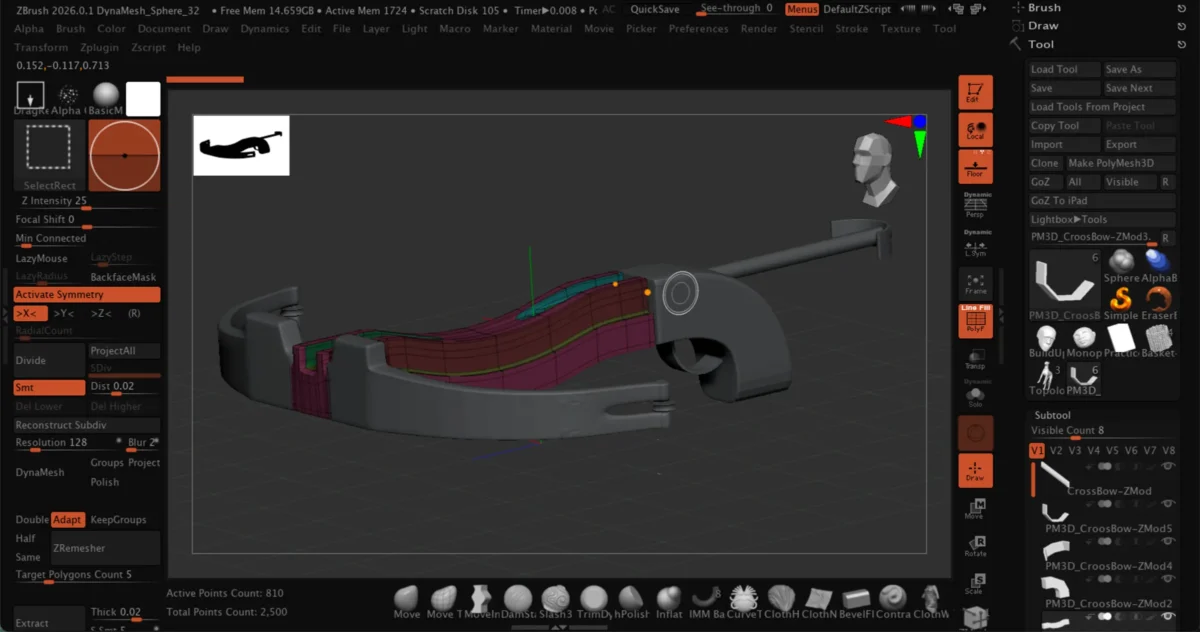
What I didn’t expect was how complex the tool itself would be. The interface alone can feel like learning a new language. I often know what I want to do but translating that into the correct sequence of actions takes time. It’s a slower process than I imagined—not because of sculpting itself, but because of learning how to access it.
At the same time, this process has exposed something else:
I’m not just learning ZBrush. I’m deepening my understanding of anatomy.
Much of my past work in relief didn’t require full anatomical knowledge of forms, but stepping into more complex sculptural work—both in relief and in the round—demands it. It feels like learning two disciplines at once.
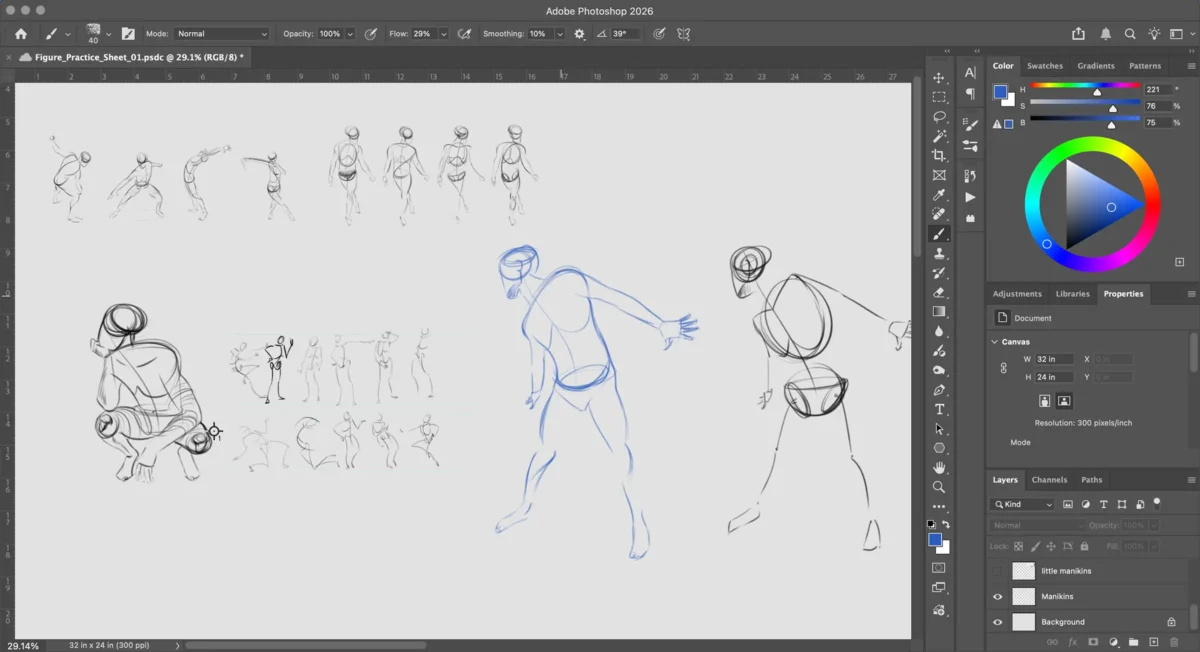
And yet, some things carry over directly. Preparation, for example. I don’t approach a piece by improvising blindly. I sketch, I iterate, I think through the form before building it. That habit translates well into digital work.
If anything, it becomes even more important, because the tool allows for so many possibilities that without direction, it’s easy to lose focus.
This shift has also challenged some of my earlier beliefs. As a stone carver, I once resisted methods like sandblasting or laser engraving. They didn’t feel “traditional.” Over time, I realized that each method has its place depending on the project.
Digital sculpting is no different. It’s not a replacement for traditional work—it’s another medium. Another way of thinking through form.
Where I see the most impact is in the finishing process. A traditional bronze commission involves multiple stages—clay, molding, casting, refinement, and eventually the foundry. With digital sculpting, parts of that process can be streamlined. A piece can be developed digitally, prepared for 3D printing, and brought into the casting process more directly.
Digital tools don’t remove craftsmanship—they shift where decisions are made.
That’s been one of the most interesting adjustments: making decisions without physical resistance.
In stone, the material pushes back. In digital space, it doesn’t.
For now, that means I must think more, not less. Every move is intentional, even if the consequences are easier to undo.
At the same time, digital tools open doors that are difficult to access in stone. Iterations become faster. Risk is reduced. I can explore variations of a piece without committing material or time in the same way.
Especially when thinking about integrating bronze elements into stone, this ability to test ideas before execution becomes invaluable.
At this point, I don’t see ZBrush as separate from my work, it’s simply another tool—no different in purpose than a chisel, just different in form. A digital extension of the same intent.
And looking forward, I can see it expanding not only how I create, but where I create, from physical studio work to more flexible, even remote, forms of production and collaboration.
Right now, ZBrush is becoming something simple for me:
My best chisel—the perfect tool, in a different language.
And like any tool, its value depends entirely on how it’s used. There’s still a lot I don’t know. But that’s part of the process. The focus now is not just on learning the tool but understanding where it fits—and what it makes possible.