The Art of Finishing: Decisions Beyond Details
marzo 15, 2026
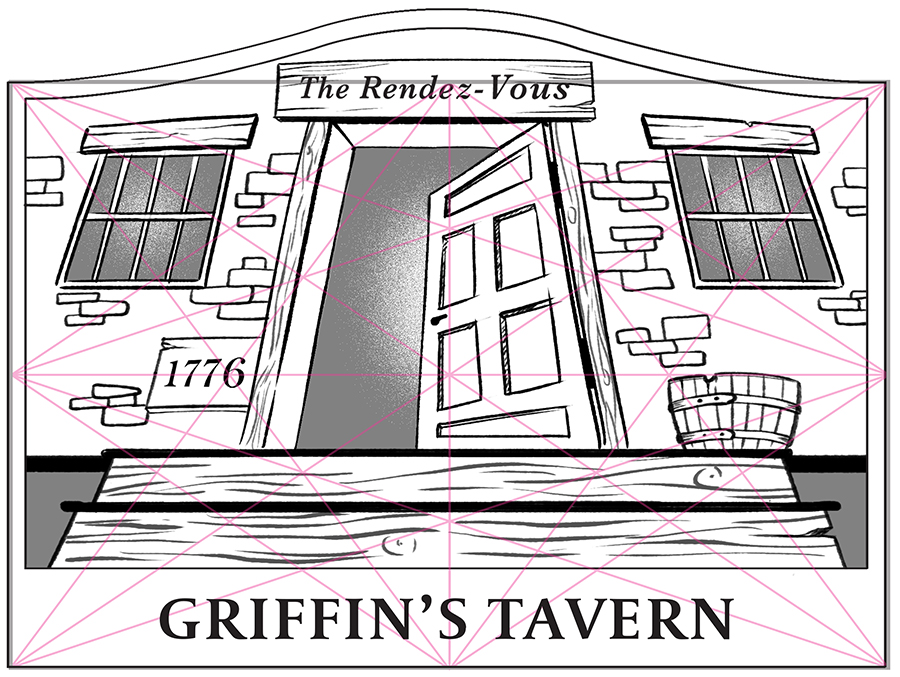
The Studio Sketchbook: Ideas, Play & Experimentation
⏱️ 3 min read
Most of the work I do begins with a commission. But ideas don’t arrive fully formed—they emerge through conversation.
A discovery meeting with a client often turns into a collection of words: adjectives, verbs, short phrases. I store these in my sketchbooks, letting them sit for a while. Over time, they begin to take shape—first as loose thoughts, then as silhouettes, forms, and compositions. Eventually, something clicks, and a concept appears.
I capture these early ideas almost exclusively in my sketchbooks.
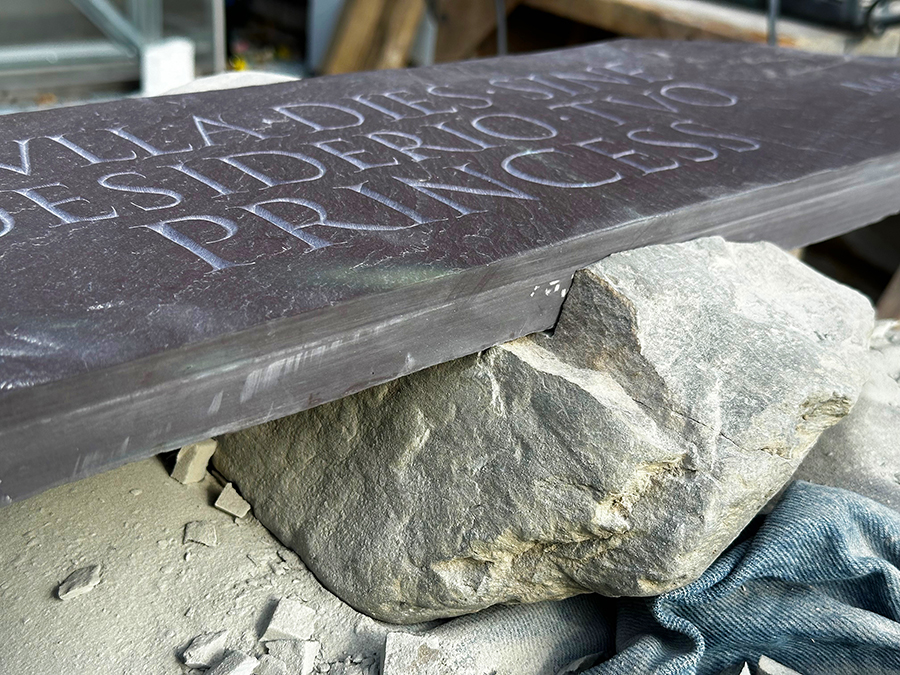
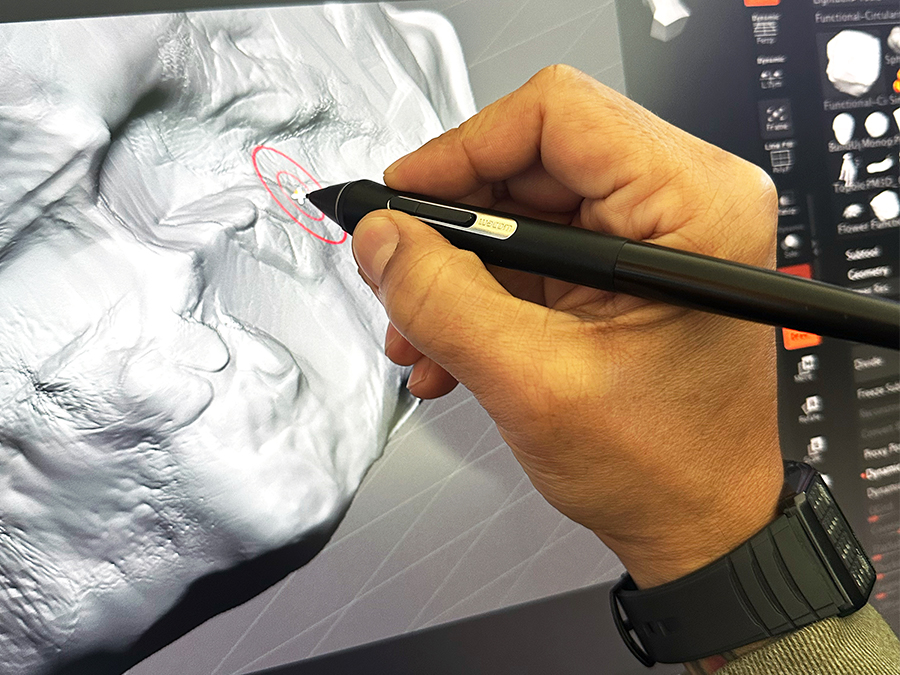
They are the most immediate and accessible space I have. From there, the idea begins to move. If I’m working on a relief for a stone memorial, I may shift into clay to simulate the final carving. More recently, I’ve also been using ZBrush as a way to sketch in three dimensions, allowing me to iterate freely without losing time or material. Each tool serves the same purpose—to hold the idea long enough so it can evolve.
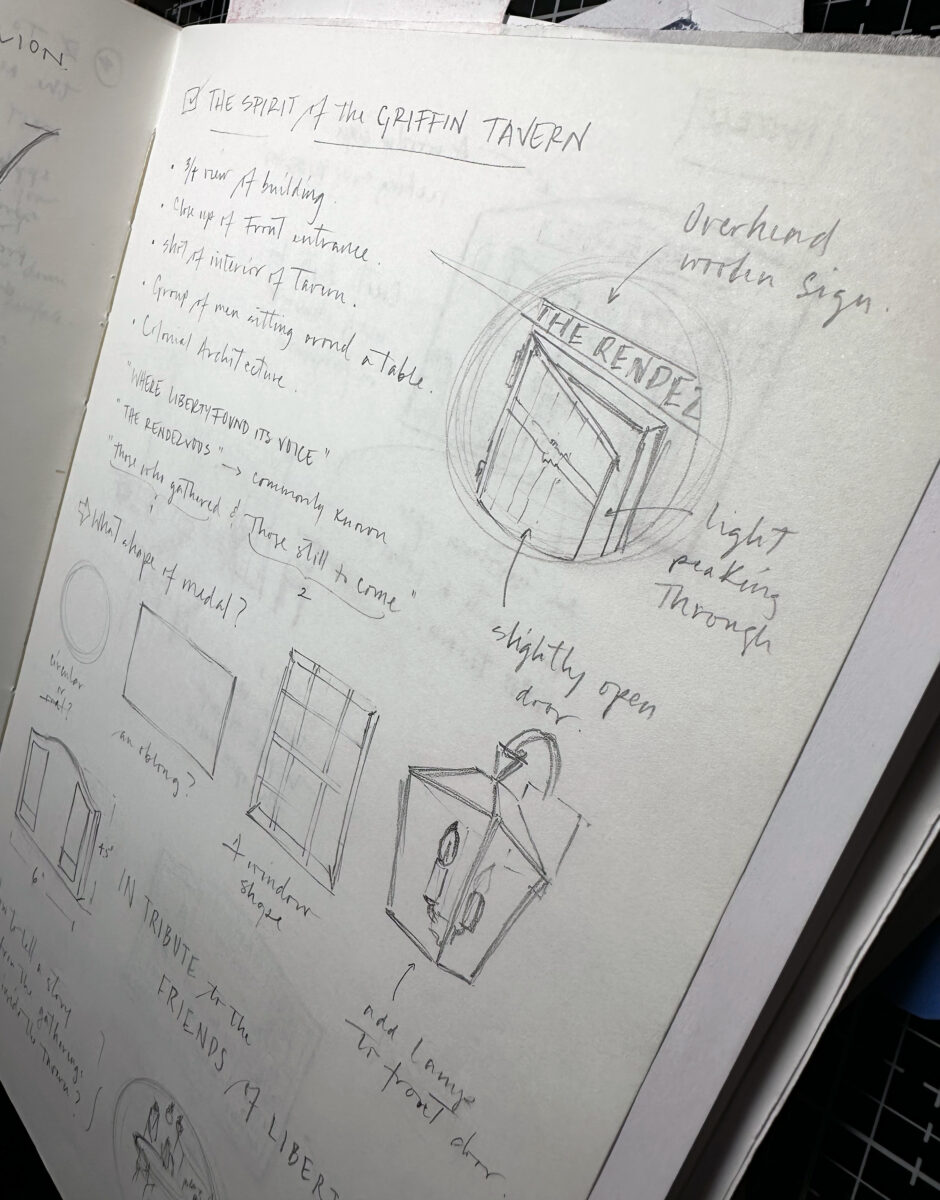
Exploration happens through iteration.
I don’t fall in love with the first idea that appears. Instead, I let it sit, turn it around, research it, and approach it from different angles. Some ideas naturally fade away; others begin to gain strength. That process of testing and letting go is essential—it keeps the work honest.
At the beginning, I often rely on structured thinking, like building from lists and concepts. It gives the idea a foundation before it takes form.
Different mediums do invite different kinds of experimentation. Clay allows for quick adjustments, stone requires commitment, and digital tools open the door to endless variation.
Still, I try to keep my process consistent by filtering everything through the three mediums I focus on: stone, clay, and digital. This keeps the work grounded while allowing flexibility in how ideas develop.
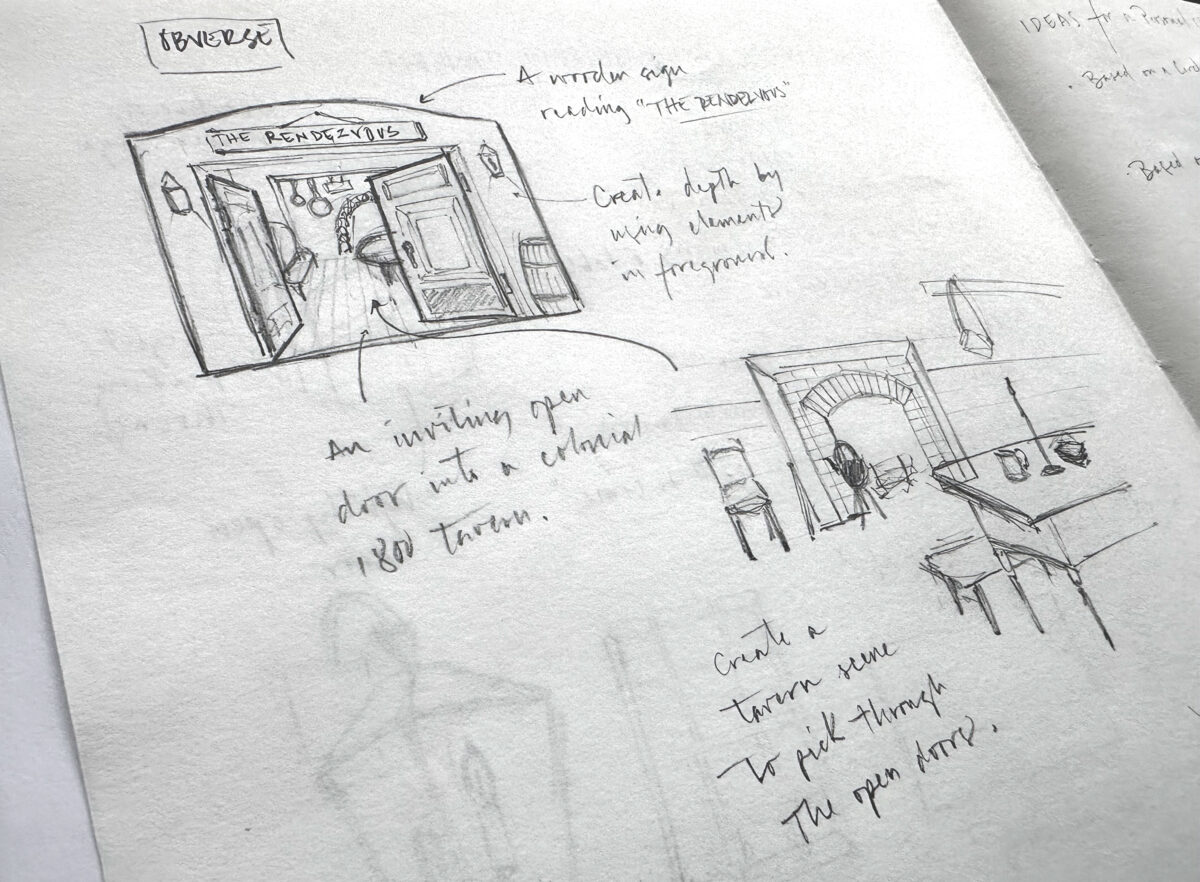
Most of the ideation phase happens on paper or through digital sketching.
It’s faster, cleaner, and easier to revise. That said, I always return to my sketchbooks. There’s something about the physical act of drawing—especially as a lettering artist, working with a mechanical pencil—that keeps me connected to the process in a different way.
When it comes to deciding which ideas move forward, I don’t judge them too early.
I allow multiple iterations to exist before narrowing things down. Once I have a clearer sense of direction, I begin selecting what works and what doesn’t. At times, I’ll also bring in a colleague or two—just to bounce ideas and see how they read from another perspective.
Not every idea evolves in unexpected ways. My work is fairly methodical. I’m not working in abstraction—each concept needs to serve a purpose and have clarity.
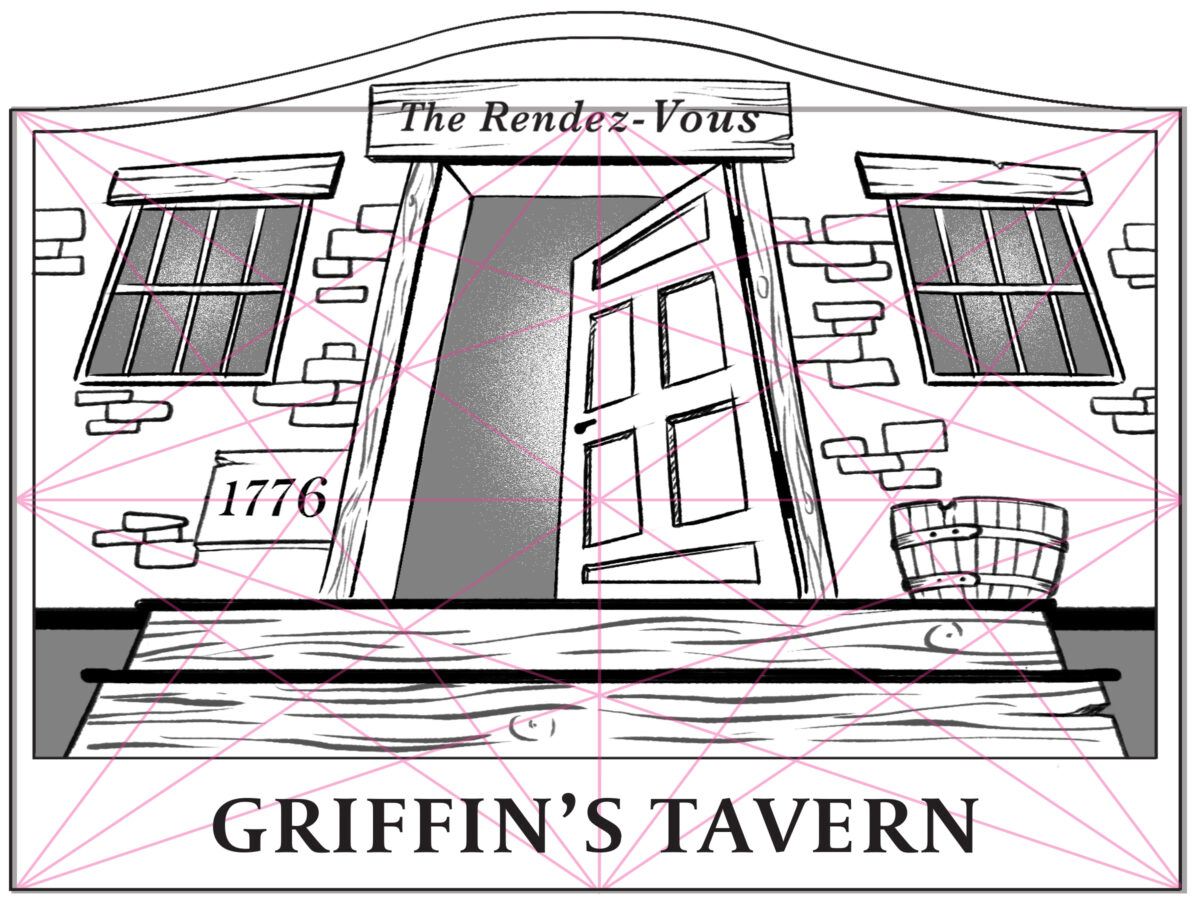
That doesn’t mean there’s no room for movement, but the structure is always there, guiding the process.
Unfinished ideas don’t go to waste.
If a concept isn’t approved, especially in lettering, I store it. Over time, these ideas become a resource—something I can revisit, adapt, and apply to a different project. The sketchbook becomes an archive, not just of what worked, but of what might still find its place later.
Curiosity plays a central role in all of this.
It’s what allows ideas to connect in unexpected ways. That constant question— “what if?”—creates space for exploration. Without it, the process becomes rigid. With it, there’s always room for discovery.
Experimenting in the studio begins in the mind’s eye.