

UNITY THROUGH ORIGIN: The Making of the Semiquincentennial Lodge No. 250 Gavel set
 10 min read
Some commissions arrive quietly. Others arrive carrying history.
When I was approached by members of the committee for the Grand Lodge of Rhode Island’s Semiquincentennial celebration, the initial request seemed straightforward: create a commemorative gavel for the newly formed SEMIQUINCENTENNIAL LODGE No. 250.
But as conversations evolved and ideas developed, it became clear that this would become more than a ceremonial tool. It would become a commemorative object tied to memory, symbolism, and continuity within Rhode Island Freemasonry.
The commission itself was not entirely unexpected. Years earlier, I had carved the cornerstone for the rededication of the Grand Lodge building, another project deeply rooted in permanence and historical continuity. What surprised me most was how far the original concept would evolve once the creative process began.
“I realized this wasn’t going to be just a Masonic gavel, but a memorial piece of art connecting Rhode Island Lodges under one celebration.”
THE BEGINNING OF THE IDEA
The initial inspiration presented to me by Bro:. Ray Geer was a stone gavel with a brass handle. As I studied the object, I quickly realized that if the piece was going to carry symbolic detail and ceremonial presence, the materials themselves would need to evolve.
Stone alone would limit certain sculptural possibilities.
So I began researching.
Traveling through various lodges, photographing ceremonial objects, studying proportions, textures, and historical forms, I built an evolving visual reference archive using the PureRef application. Somewhere during that process, the direction became clear: bronze and wood needed to work together.
Not simply for appearance, but for meaning.
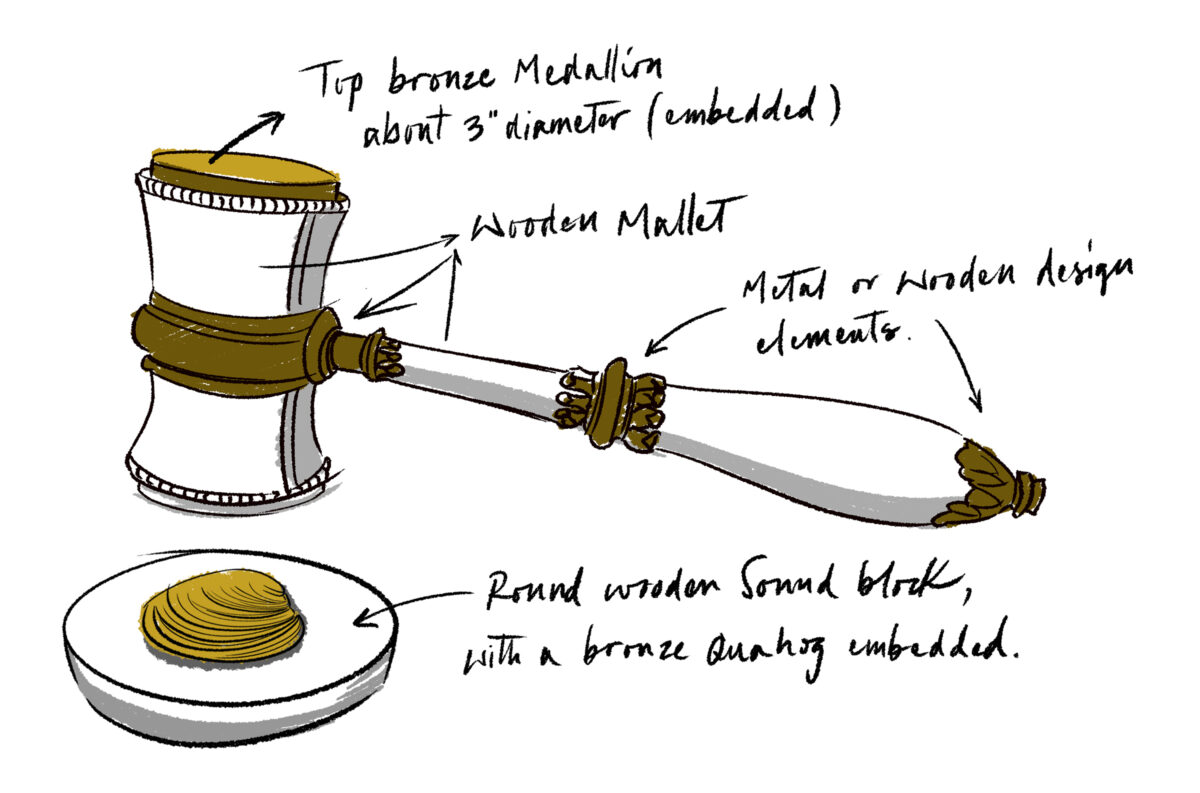
Early digital sketches of the gavel set. More iterations came after.
At the same time, I began reflecting on what this commemorative lodge represented historically.
Semiquincentennial Lodge No. 250 was created as part of the 250th anniversary celebration of the founding of the United States. The lodge itself would open only on special occasions throughout the commemorative year, functioning as a symbolic gathering place honoring those responsible for the freedoms and ideals upon which the nation was built.
That realization changed the weight of the project. This object would not simply be used.
It would participate in ritual, remembrance, and historical continuity.
FROM SKETCH TO BRONZE
Like many of my projects, the process began loosely. Sketchbook drawings. Thumbnail concepts. Exploratory line work. Sometimes ideas move directly into a digital tablet. Other times they remain in graphite for weeks before evolving physically into clay.
Eventually, however, the work has to leave imagination and enter material.
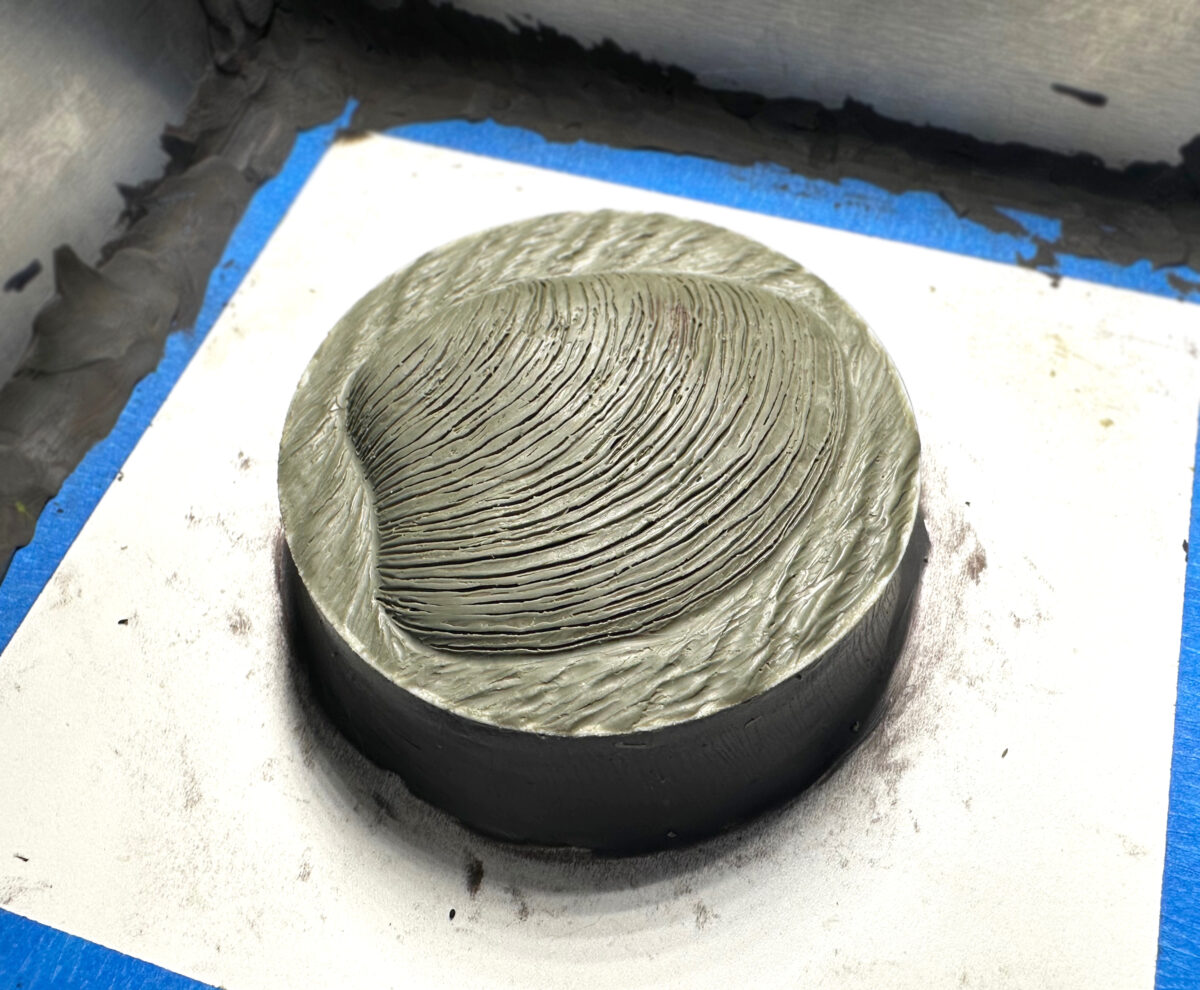
Clay model of the top crown, ready for a plaster mold.
Because the final objective was bronze casting, the process was approached by reverse engineering the casting pipeline itself.
A bronze casting requires a wax.
A wax requires a silicone mold.
A silicone mold requires a positive plaster model.
And the plaster model begins with clay.
Understanding the entire process from the end backward allows every stage to support the final material outcome.
One of the greatest technical challenges became the shell itself.
The organic growth rings of the quahog appear simple at first glance, but they possess an incredibly subtle rhythm. As the shell grows, the rings tighten, widen, and shift naturally over time. Capturing that without making it feel artificial became one of the most demanding aspects of the project.
“I modeled the basic shapes in clay but finished many of the details by carving directly into plaster. Carving plaster always feels like a quiet conversation with stone.”
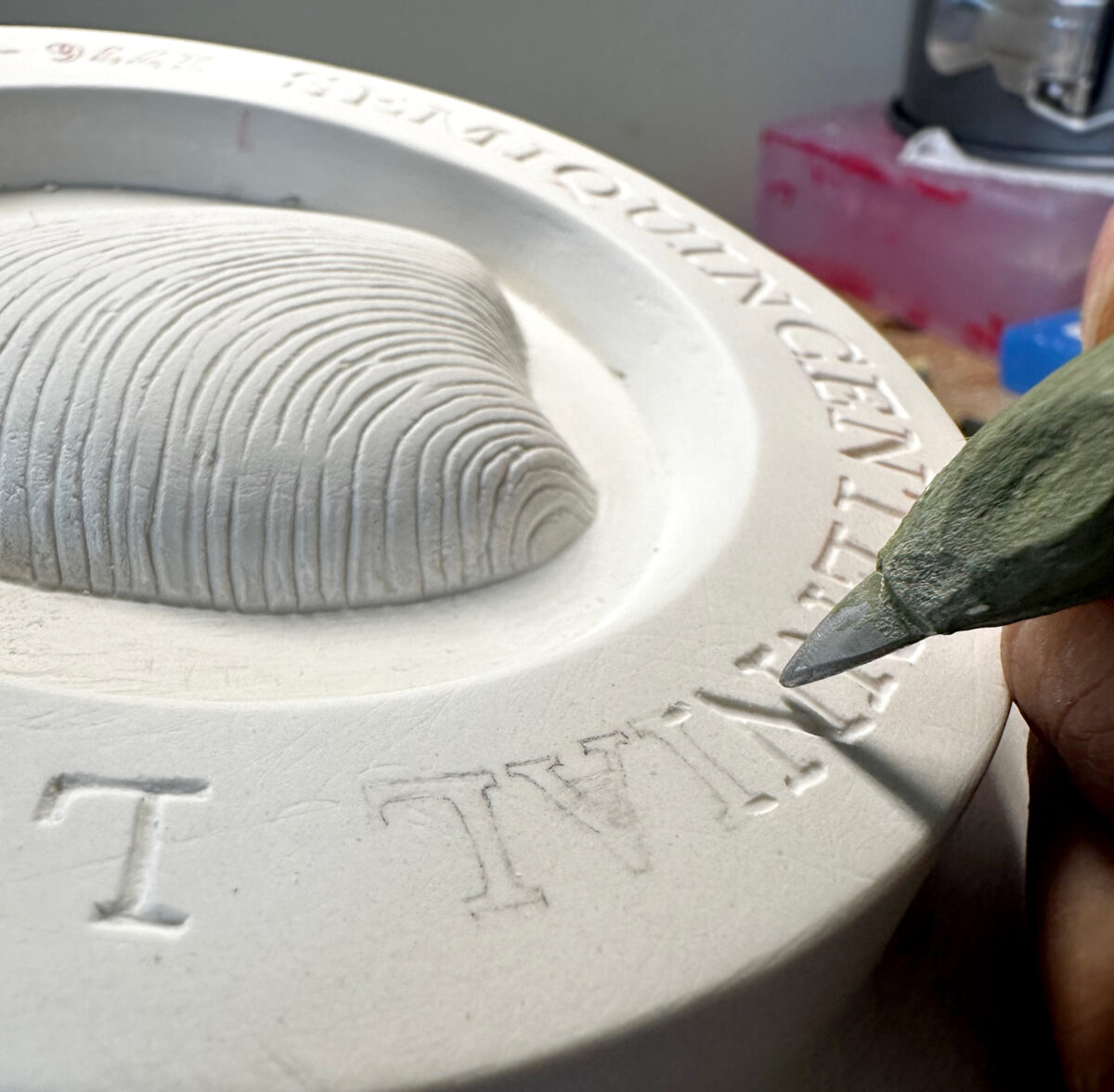
Process shot of plaster carving. Tiny letters being meticulously carved.
During the modeling process, another important decision emerged.
Originally, I considered presenting the shell by itself. But after studying the shell within its natural environment, the composition evolved to include subtle suggestions of tidal movement and wet sand beneath the shell itself.
It was important that the symbol felt rooted. Not isolated.
You may not notice it immediately when viewing the finished medallion, but beneath the shell there are soft traces suggesting the memory of shoreline and tide.
A quiet reminder of origin.
SEARCHING FOR A SYMBOL
The design process began not with drawings, but with words.
Lists of ideas. Associations. Historical references. Rhode Island identity. Native symbols. Concepts tied to origin, endurance, and place.
While building mind maps and symbolic connections, one image kept returning to me: the quahog shell.
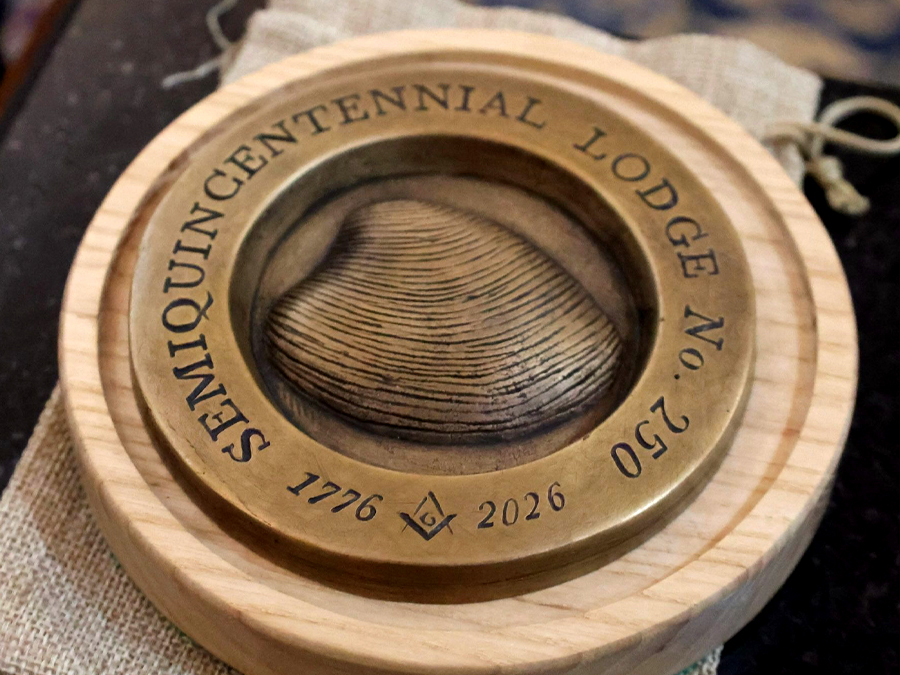
For Rhode Islanders, the quahog carries a strong cultural and geographical identity. But beyond that, it represented something deeper to me. The quahog represents unity through origin. It is humble, resilient, and shaped by time and tide.
The shell became the conceptual center of the project. At the crown of the gavel sits a sculpted bronze medallion centered around the quahog shell. That same symbol continues below on the bronze sound block, creating a visual dialogue between the upper and lower forms of the set.
The symbolism was intentional.
When the gavel strikes, the symbol above and below meet through action.
“It is not simply wood meeting metal. It is form meeting origin. The action completes the idea.”
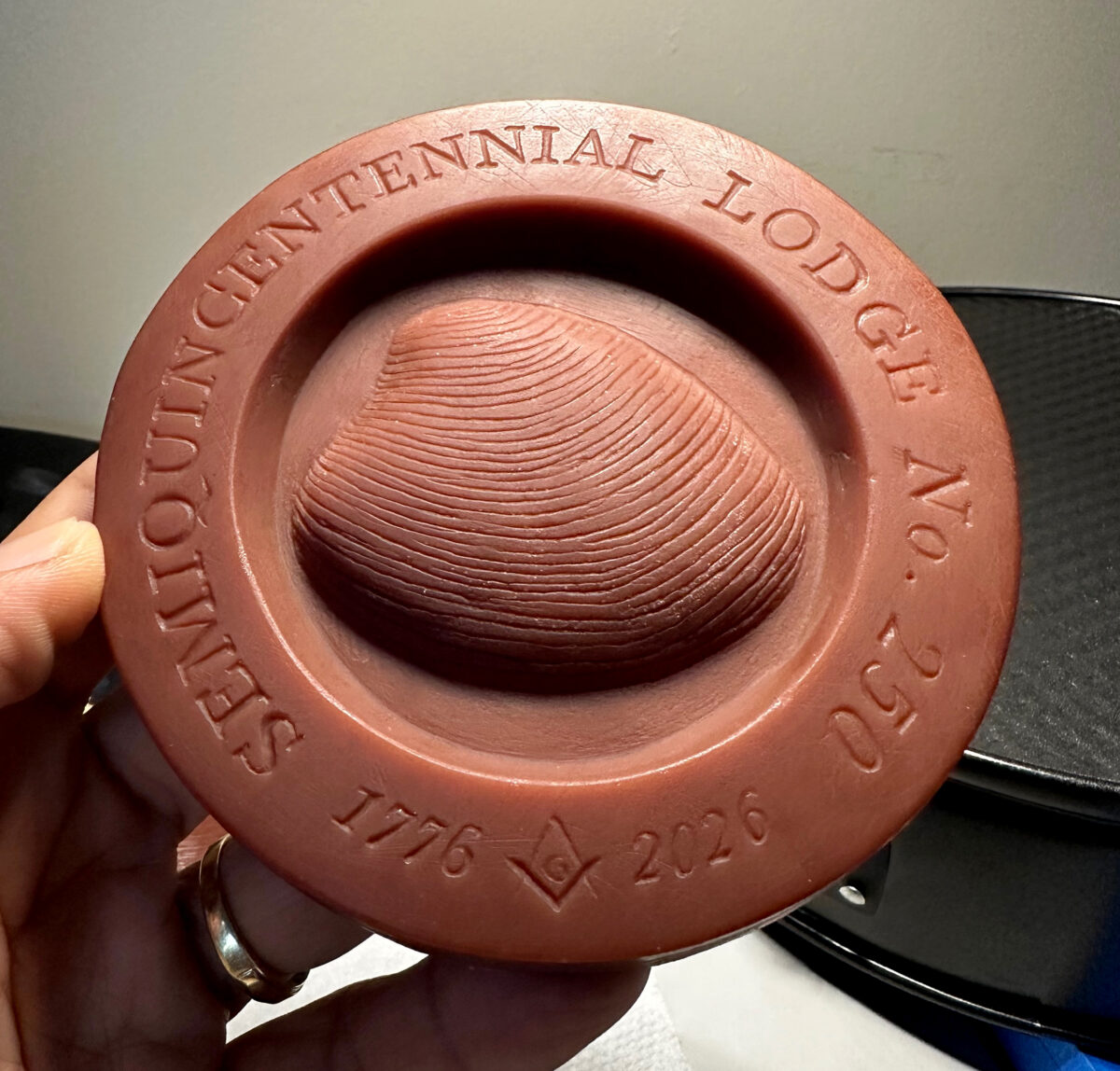
Striker base poured in wax, ready for the foundry. (Harrison Casting, Johnston, RI)
A GESTURE TOWARD HISTORY
The overall proportions of the gavel were subtly inspired by the original gavel associated with Brother George Washington.
Not as a direct replica, but as a gesture.
A way of allowing early American Masonic history to quietly echo into the present.
That historical reference naturally brought a sense of ceremonial presence and dignity to the object. At the same time, I wanted the set to feel grounded in Rhode Island itself, not detached from place. The materials became essential in achieving that balance.
Bronze was chosen for the medallion crown and striker because of its relationship with time.
“Bronze holds time. It records touch, impact, and age.”
Patina, wear, and handling become part of the object’s life rather than its deterioration.
Wood, however, introduced warmth and humanity.
The gavel itself was crafted from white ash, native to the region, by Brother Charles M. Oliver, member of Harmony Lodge No. 9, Cranston, RI, a master wood craftsman whose skill and meticulous character became an essential part of the project.
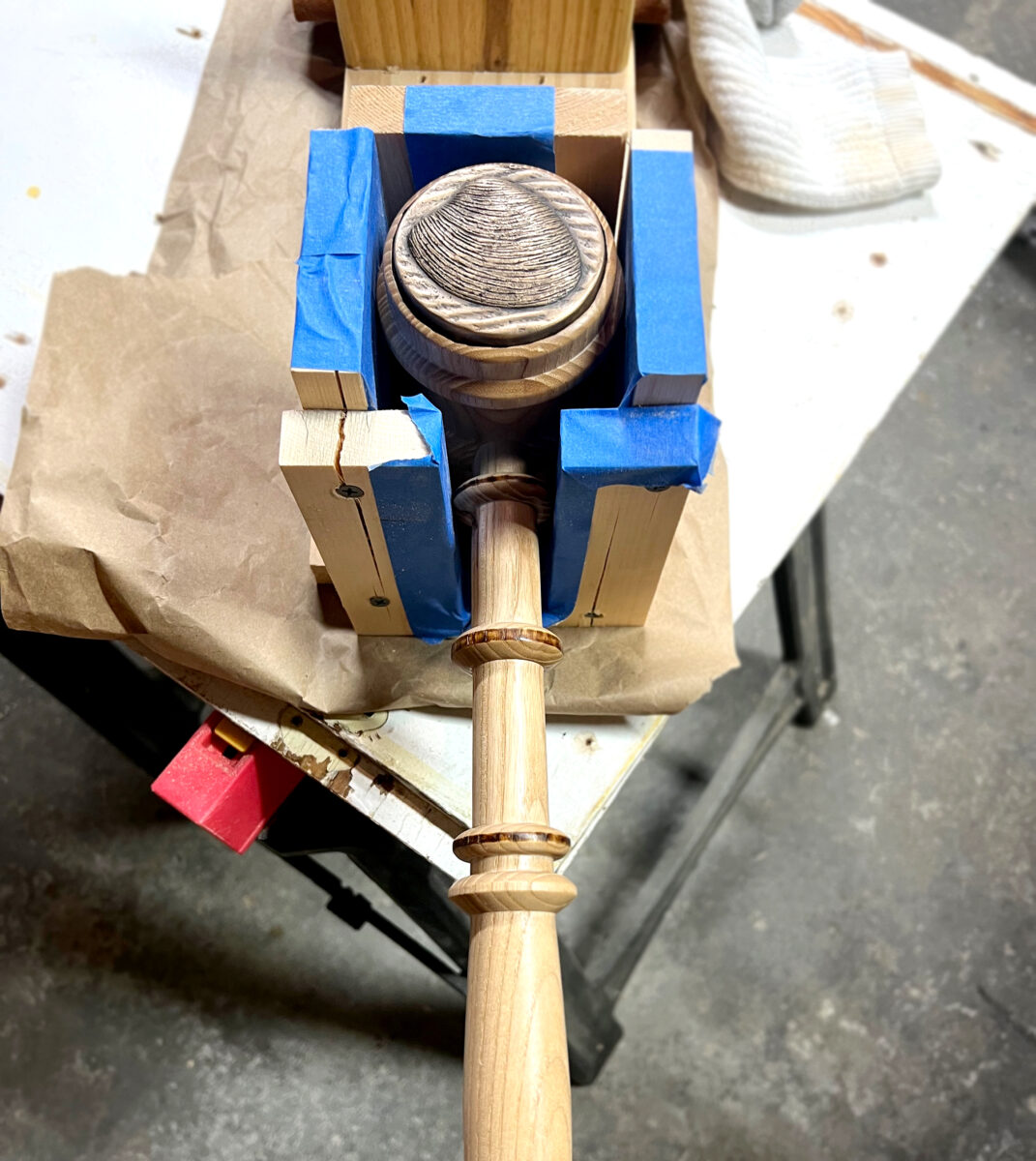
Bronze top crown fitting on the wooden gavel made by Chuck Oliver.
Chuck’s contribution was far more than fabrication. The addition of the bronze crown required careful adjustments to the proportions and construction of the gavel head to ensure a precise and seamless fit.
Watching another craftsman bring the wooden form into physical reality added another layer of meaning to the collaboration. Craftsmanship recognizing craftsmanship.
THE IMPORTANCE OF SOUND
One of the most overlooked aspects of the project became one of the most important.
The sound.
Traditionally, the striker could have been made entirely from wood, matching the ash gavel itself. But from the beginning, I felt the sound block needed to exist in bronze. Not simply for durability, but for resonance.
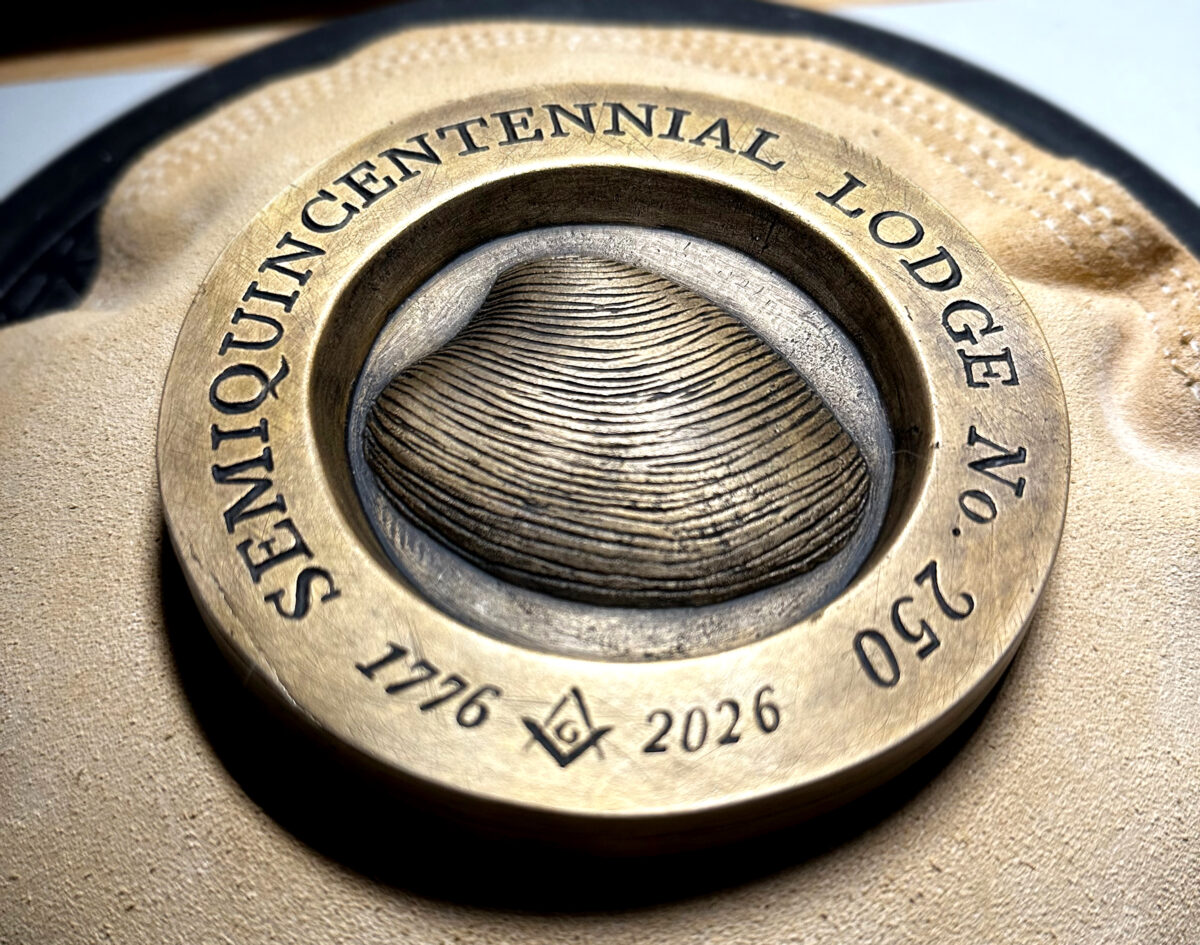
Details of the tool marks are showing in the bronze striker.
When wood strikes bronze, the sound changes completely. The impact carries a clarity and ceremonial gravity impossible to achieve otherwise. That moment became symbolic in itself.
The upper quahog medallion and the lower bronze sound block enter into dialogue through action and sound. The strike itself completes the composition.
HANDCRAFTED OBJECTS IN A DISPOSABLE CULTURE
One thought stayed with me throughout the project: This could easily have been mass-produced.
A catalog gavel ordered online would have fulfilled the practical requirement. It would have functioned perfectly well. However, this commission was asking for something different.
Something tied to memory, craftsmanship, and permanence.
“When you commission an art piece, you see traces of the hand behind it. The imperfections become part of its uniqueness.”
Tool marks remain visible in the bronze. The hand-shaped transitions in clay survive the casting process. The patina continues changing subtly over time.
These are not flaws. They are evidence of human involvement.
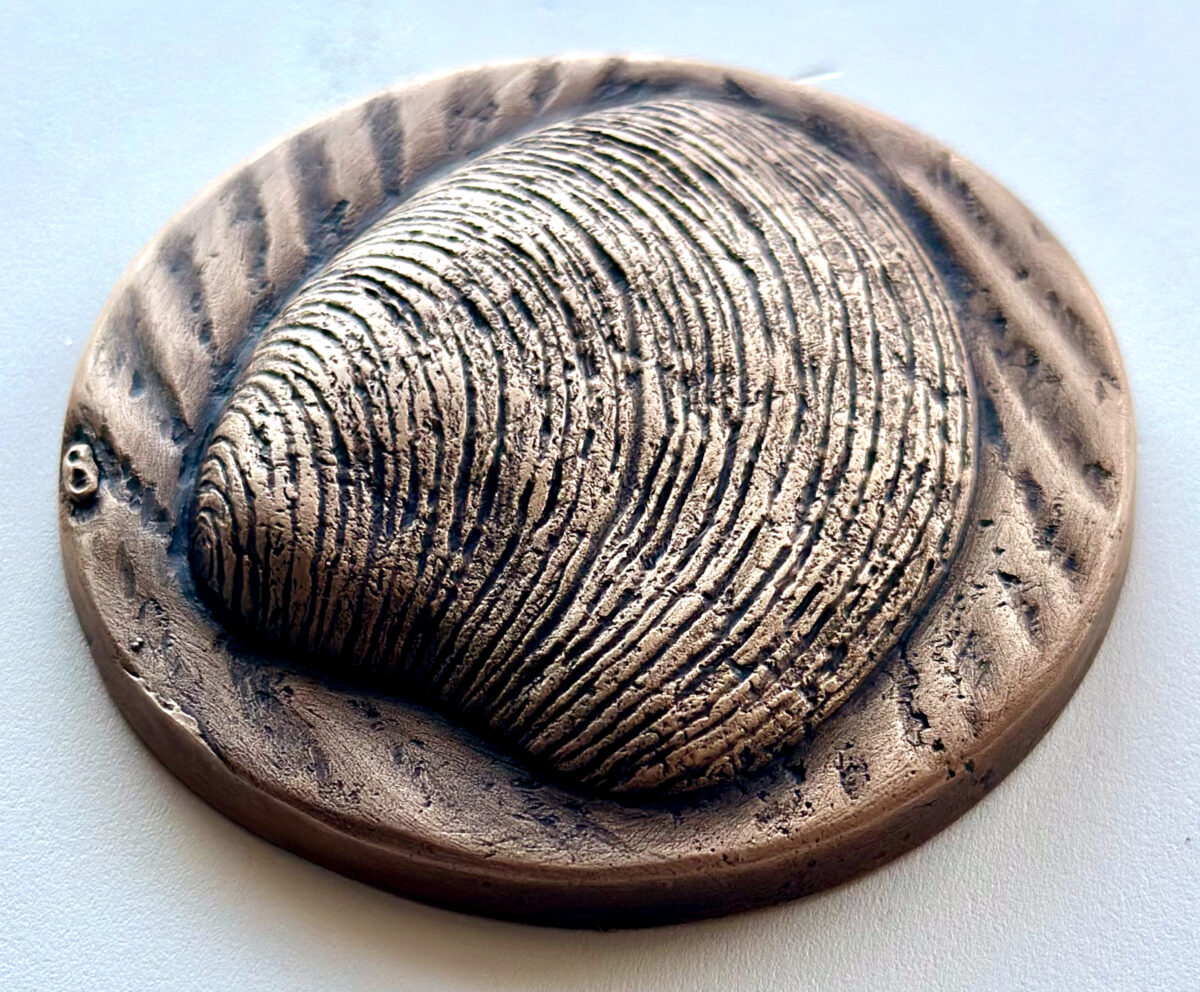
Details of the subtle shoreline and tide mark-making.
For ceremonial objects especially, that human presence matters deeply. Ritual objects carry emotional and symbolic weight beyond utility alone. They connect people not only to tradition, but to those who came before them.
In many ways, handcrafted ceremonial objects create a bridge between memory and participation.
Looking forward.
What I hope future members feel when handling this gavel decades from now is simple: Connection. Connection to Rhode Island. Connection to Masonic history. Connection to the people who cared enough to preserve those memories through craftsmanship and symbolism.
“Unity Through Origin.”
That phrase remained quietly present throughout the entire project. Not simply as a design concept, but as a reflection of what this commemorative lodge represents.
Looking back, what I am most proud of is not simply the finished object itself, but the opportunity to contribute artistically to a historical moment within Rhode Island Freemasonry. To participate respectfully in something larger than myself.
As artists and craftsmen, we sometimes become temporary caretakers of memory.
And occasionally, if we are fortunate, we are entrusted to give that memory material form.
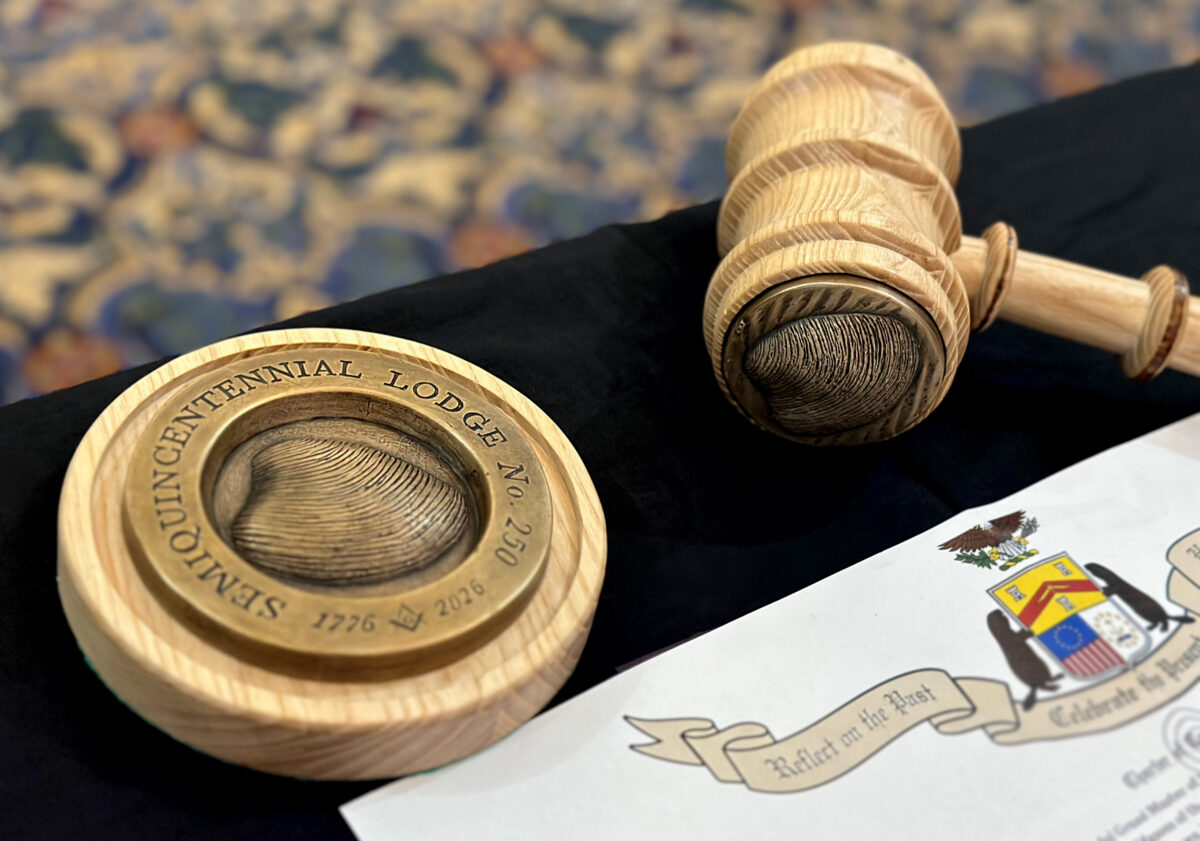
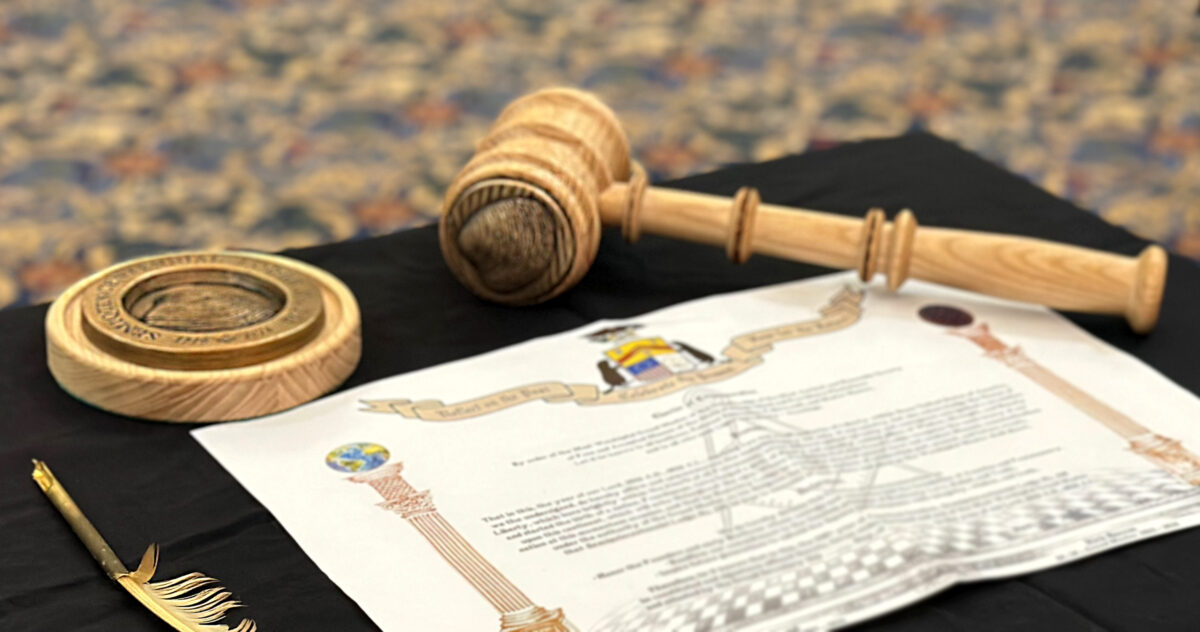
The completed gavel set resting in ceremonial stillness.
Photography and process documentation by Javier R. Alfonzo, Sente Stoneworks © 2026