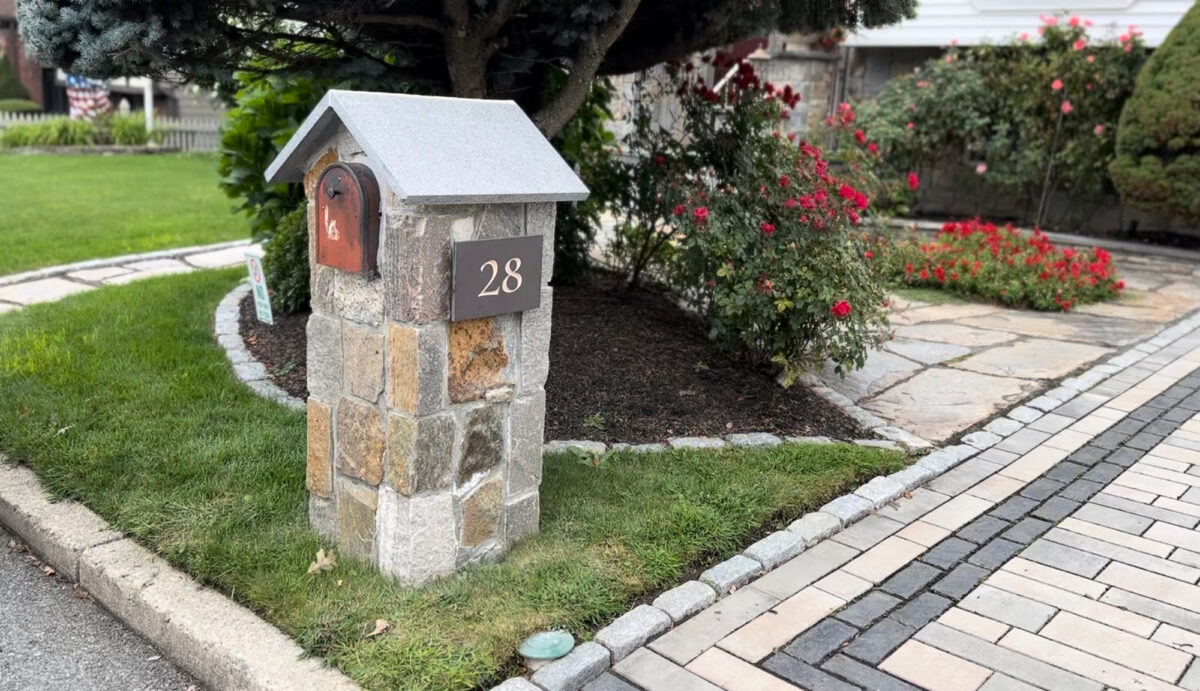
CARVING A SENSE OF PLACE: Lettering as an Element of Landscape Architecture
 7+ min read
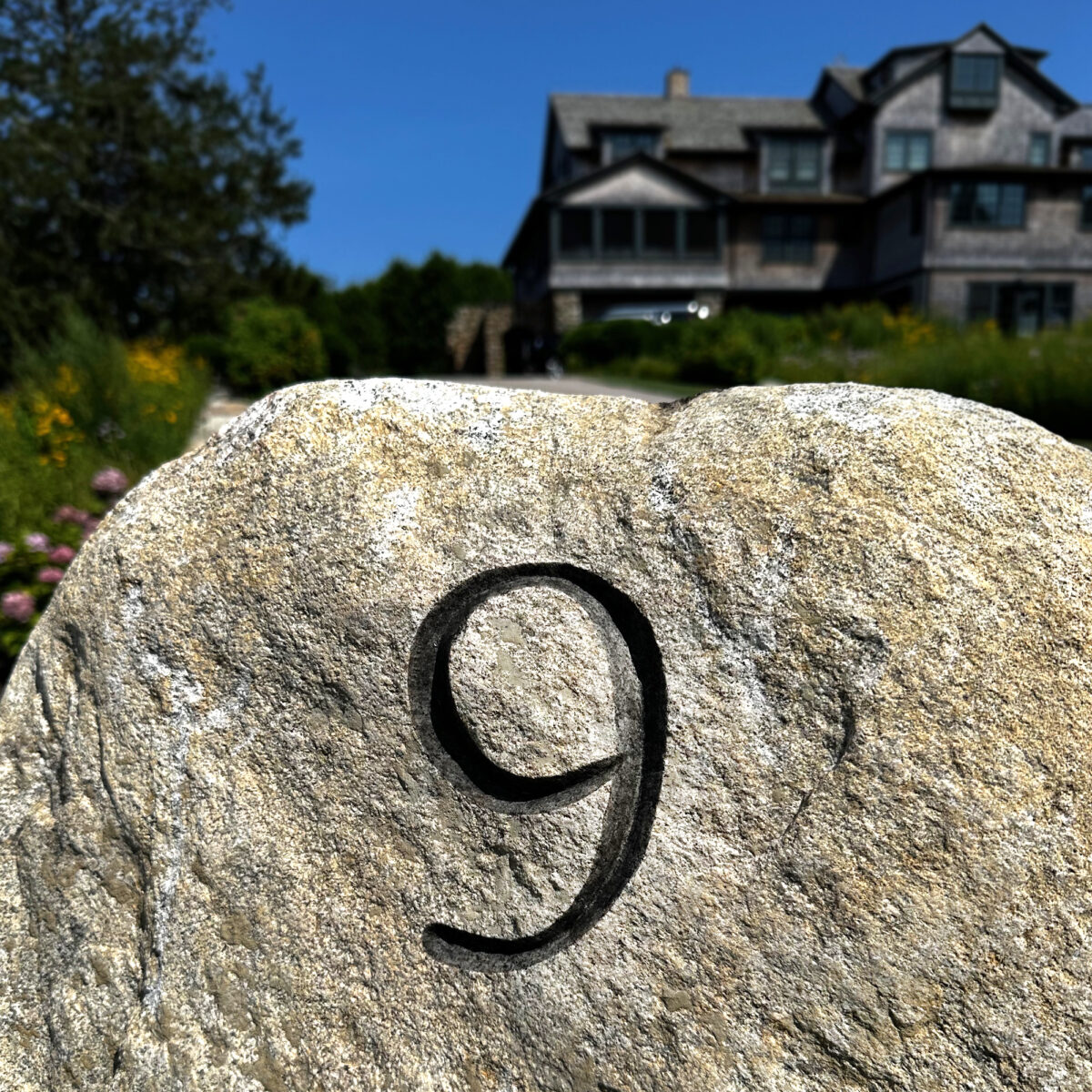
A house number serves a practical purpose: it identifies an address. But when those numbers are carved by hand into an existing natural boulder, something more interesting happens. The stone becomes part of the architectural identity of the property.
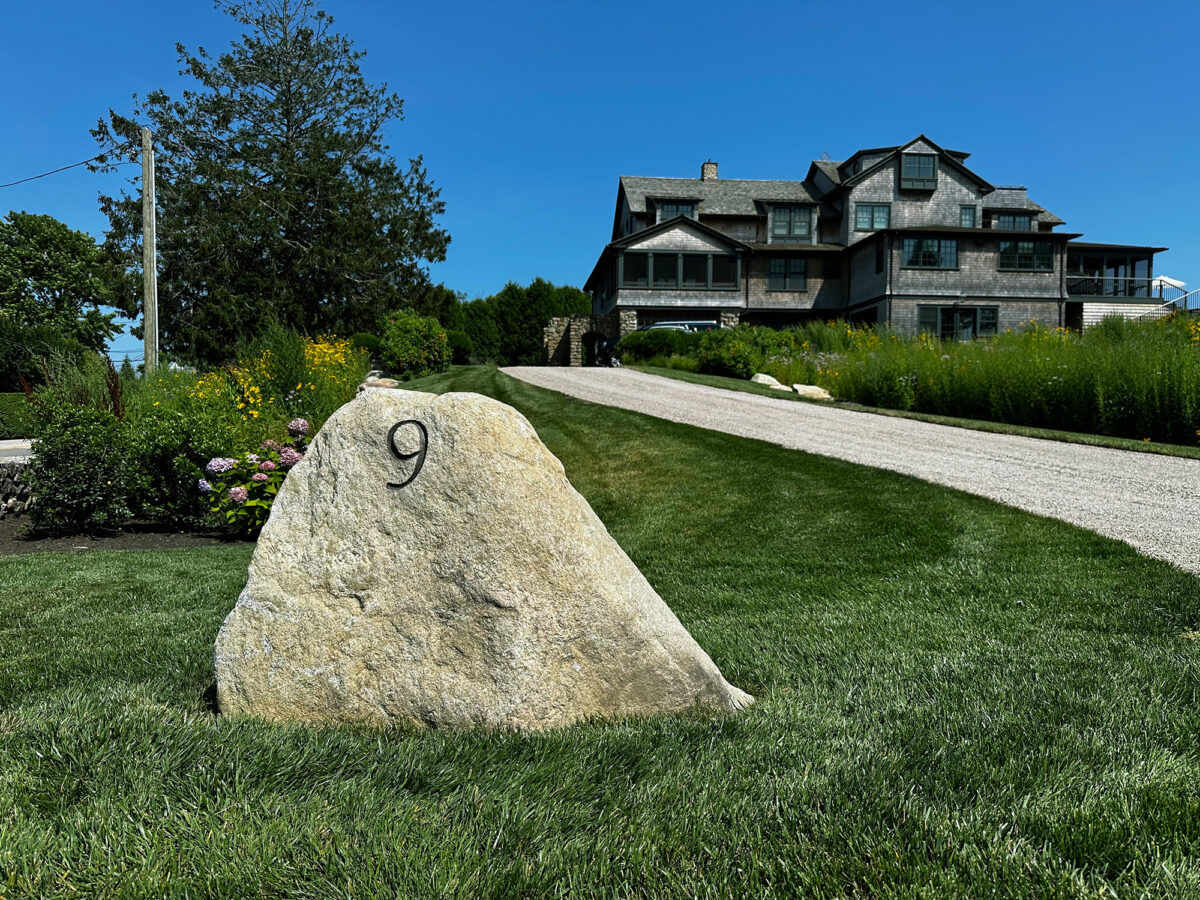
Throughout New England, natural boulders are familiar features of residential landscapes. Some have occupied their place for centuries or longer, their forms shaped long before the surrounding houses existed. Rather than introducing a manufactured sign, these stones can become the foundation of a permanent, site-specific architectural feature.
At SENTE Stoneworks, I approach these commissions through the combined disciplines of lettering design, traditional stone carving, and an understanding of the landscape.
The intention is not simply to place an inscription on a stone, but to establish a meaningful relationship between the material, the architecture, and its surroundings.
THE LANDSCAPE BECOMES THE SIGN
A natural boulder may have occupied its place in the landscape for centuries, largely unnoticed. Its shape, texture, and presence already belong to that environment. But the introduction of a carefully designed, hand-carved inscription changes how we perceive it.
What was once simply a stone in the landscape becomes an intentional element of its architectural composition. It now identifies a place, communicates a name, and establishes a relationship between the property and those who encounter it.
The stone itself remains essentially unchanged. What changes is its purpose within the landscape.
The tradition of giving homes names, displaying family surnames, and incorporating inscriptions into residential architecture has existed for centuries. Across Europe and South America, such details have long contributed to the character and identity of a house.
Through residential commissions in Watch Hill, East Greenwich, South Kingstown, and Southern Connecticut or Connecticut’s coastal “Gold Corridor”, I have worked with natural stone in a variety of architectural and landscape settings, from coastal properties to established residential estates.
Each project presents a different relationship between the home, its surroundings, and the stone itself. These experiences have reinforced my belief that architectural lettering is most successful when conceived specifically for its location, rather than treated as a decorative addition.
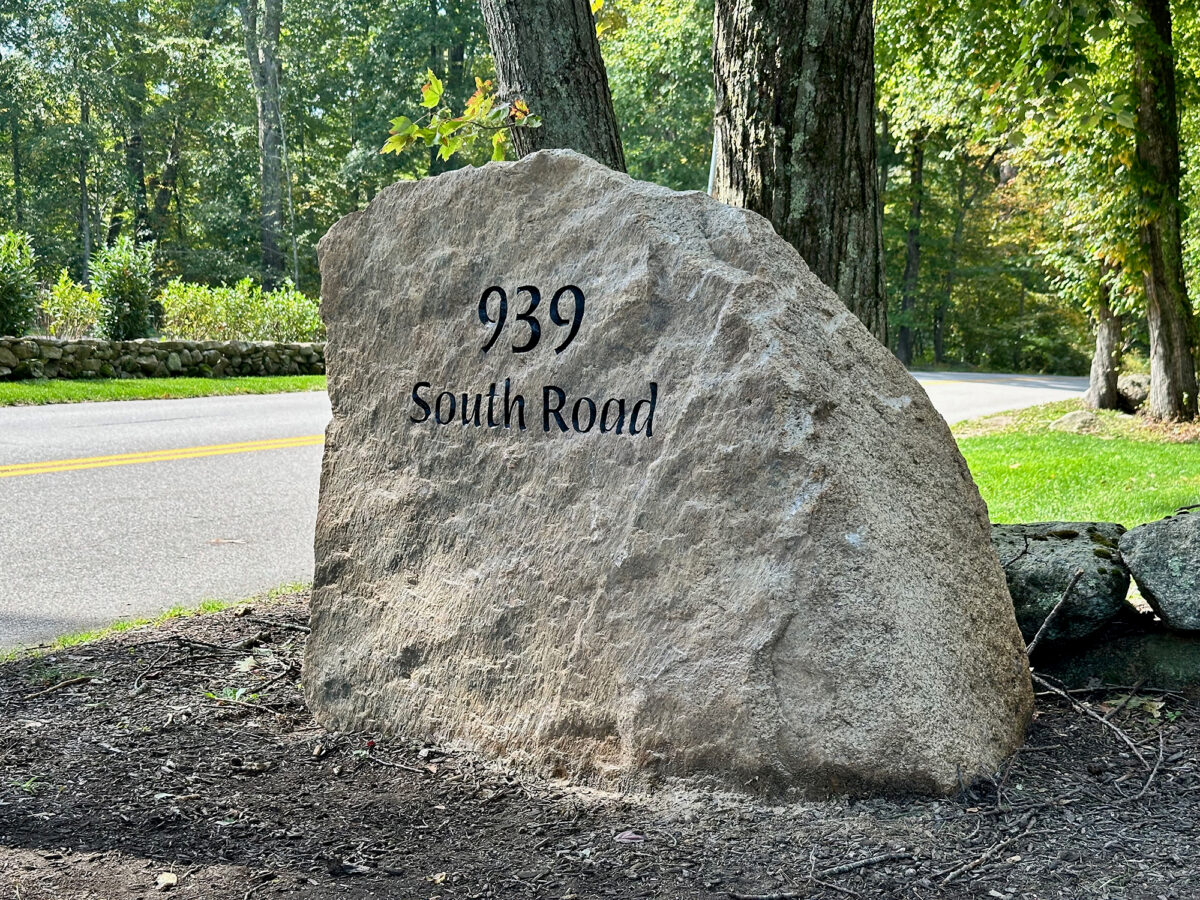
Unlike a manufactured sign designed for countless locations, a hand-carved inscription can be conceived for one stone, one property, and one architectural setting.
The result is not simply an object placed within a landscape. It becomes part of the landscape’s design.
DESIGNING WITH THE STONE, NOT AGAINST IT
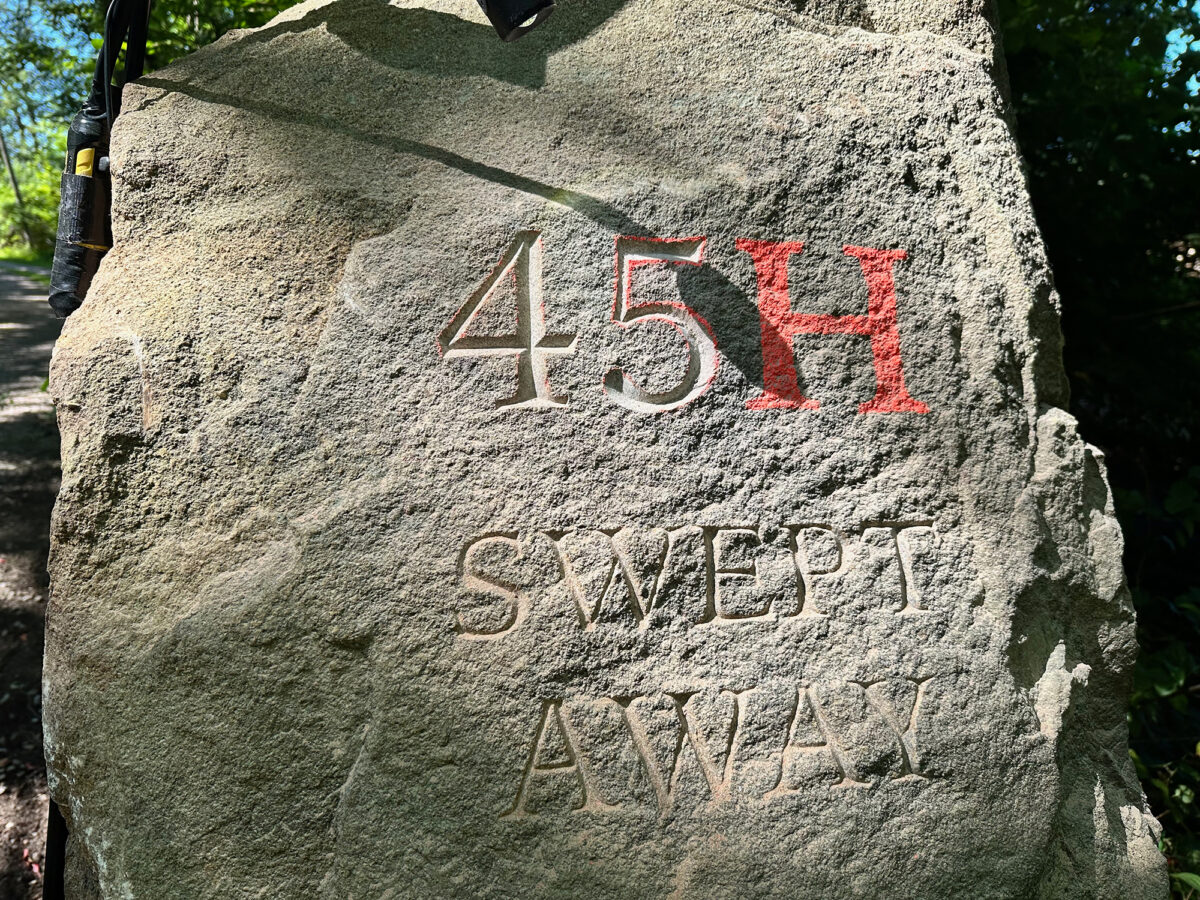
Site-specific design begins with observation.
Every boulder presents a different set of possibilities and limitations. Its shape, surface, geological composition, and position within the landscape influence the design before the first letter is drawn.
Some stones have fine, consistent structures that accommodate precise lettering. Others contain coarse aggregates, fractures, or unstable areas that require a different approach. Not every stone is equally suitable for detailed carving.
Before beginning a design, I examine these characteristics, sometimes testing an inconspicuous area to better understand how the material responds to the tools.
The design process begins with consultation, photographs, measurements, and an evaluation of how the inscription will be viewed.
Letter height, spacing, proportions, and placement must work together. For residential addresses, visibility from the road is particularly important, but legibility should not come at the expense of a well-balanced composition.
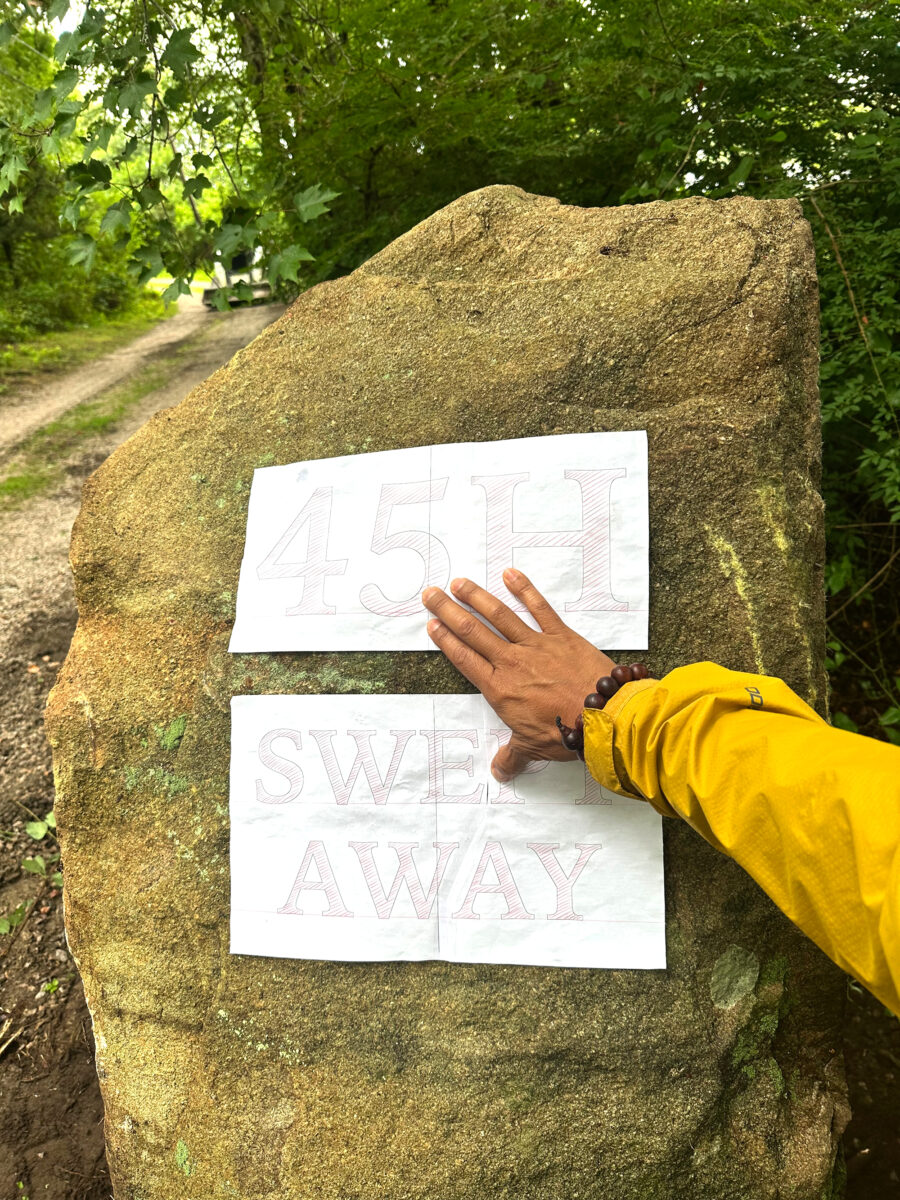
I develop preliminary layouts to evaluate these relationships before preparing full-size drawings.
Even then, adjustments may be necessary. A letter may encounter an unexpected surface irregularity, or the full-size composition may reveal a better placement than the original drawing suggested.
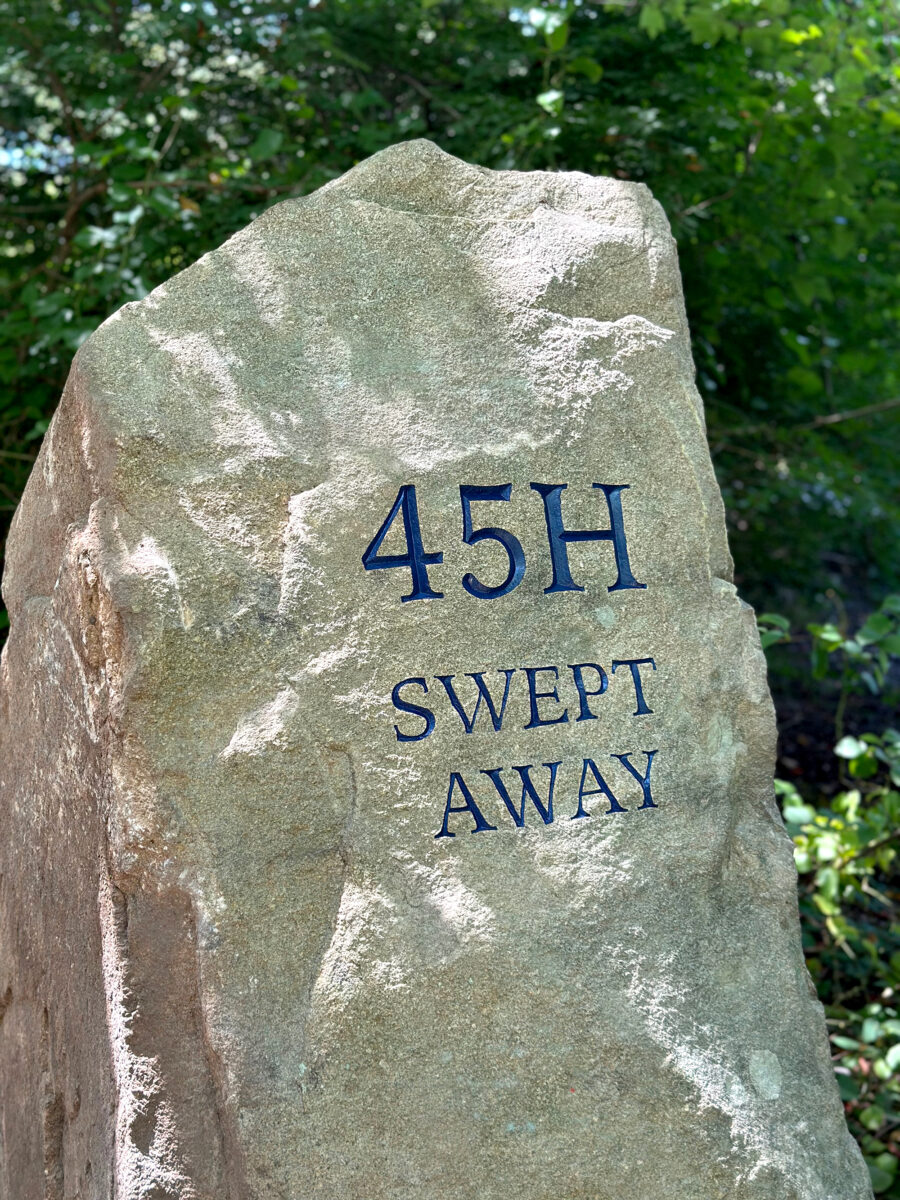
This is where the stone becomes an active participant in the design process.
The objective is not to impose a predetermined composition onto an irregular surface. It is to find a solution that respects the stone’s character while fulfilling the architectural purpose of the inscription.
THE CRAFT OF THE CUT
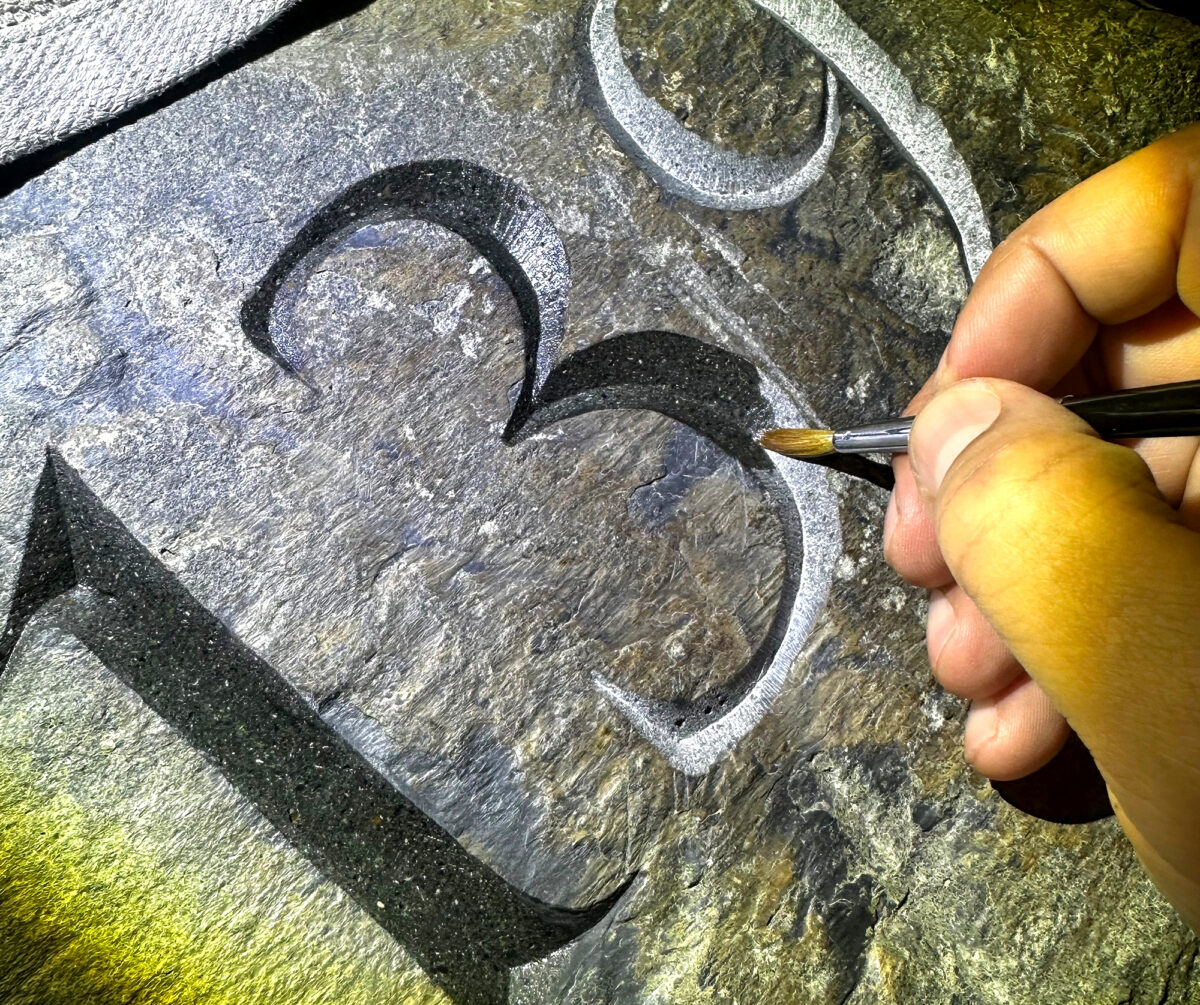
One of the aspects I enjoy most about carving natural boulders is the relationship between the precision of the lettering and the irregularity of the stone.
A carefully drawn letter has structure, proportion, and rhythm. The surface receiving it may contain shallow depressions, raised areas, natural fractures, or subtle changes in texture.
As the carving progresses, the letter moves through these variations. Its edges and internal surfaces respond to the stone without losing the essential character of the design. This requires constant judgment, control, and an understanding of the material.
Unlike printed lettering, a carved inscription occupies physical depth.
Light enters the cut, catches one wall, and casts a shadow against the other. As the sun moves across the landscape, the appearance of the lettering changes.
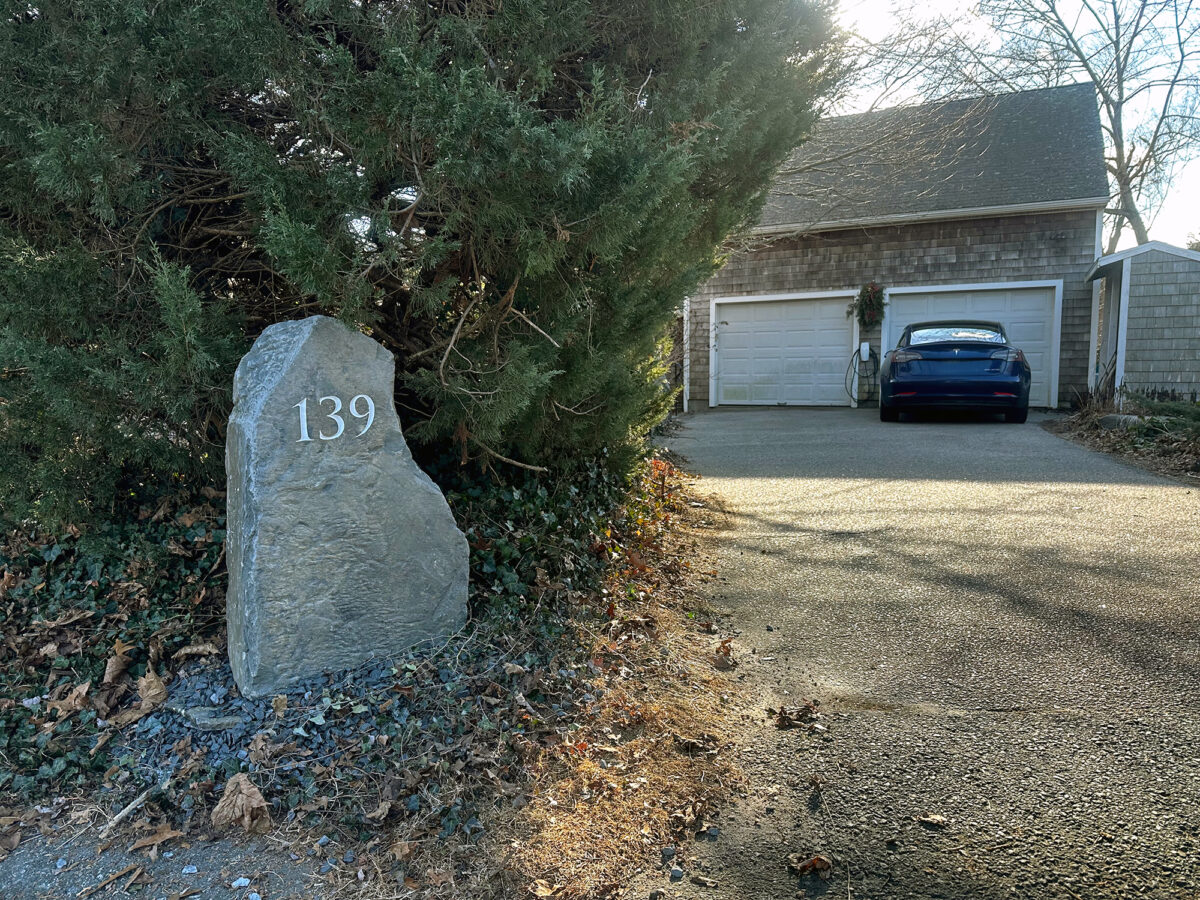
The inscription becomes a three-dimensional element whose character is shaped by material, craftsmanship, and light.
FROM THE GARDEN BOULDER TO THE MUSEUM WALL
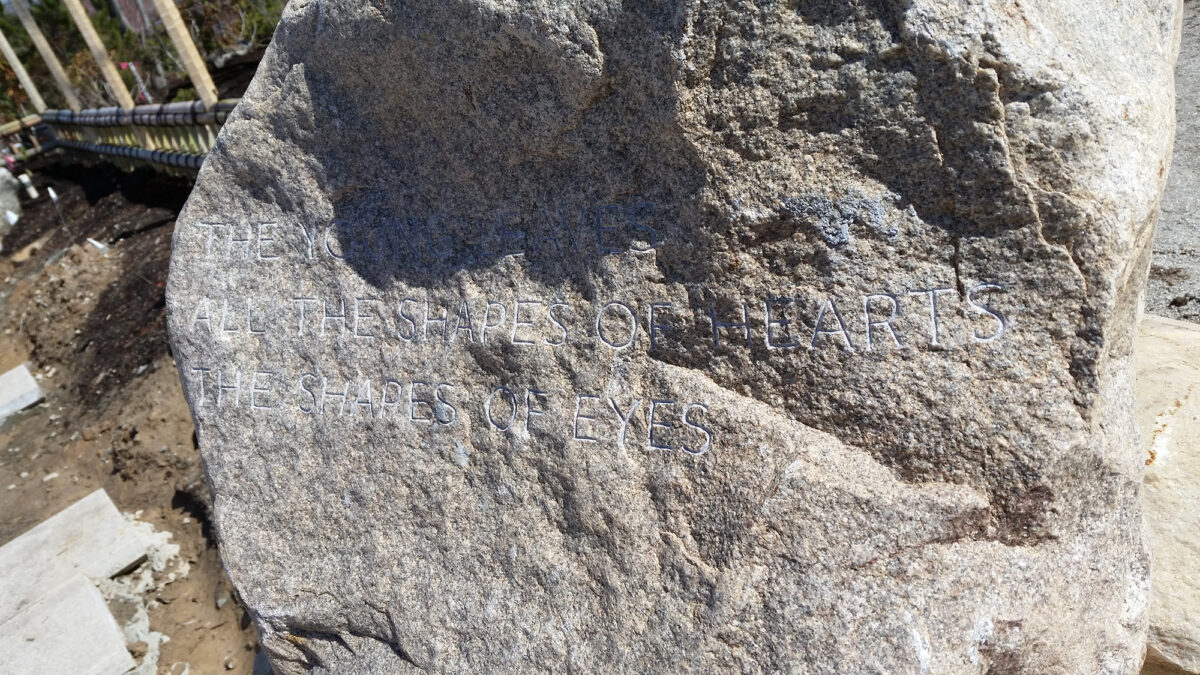
My interest in residential architectural lettering grows from years of working on much larger inscription projects.
As a collaborating stone carver on projects commissioned by conceptual artist Jenny Holzer, I participated in carving poetry into granite boulders at Frederik Meijer Gardens in Michigan, multilingual inscriptions on natural boulders at a private estate in Ibiza, and monumental lettering on the exterior limestone walls of the Raclin-Murphy Museum of Art at the University of Notre Dame.
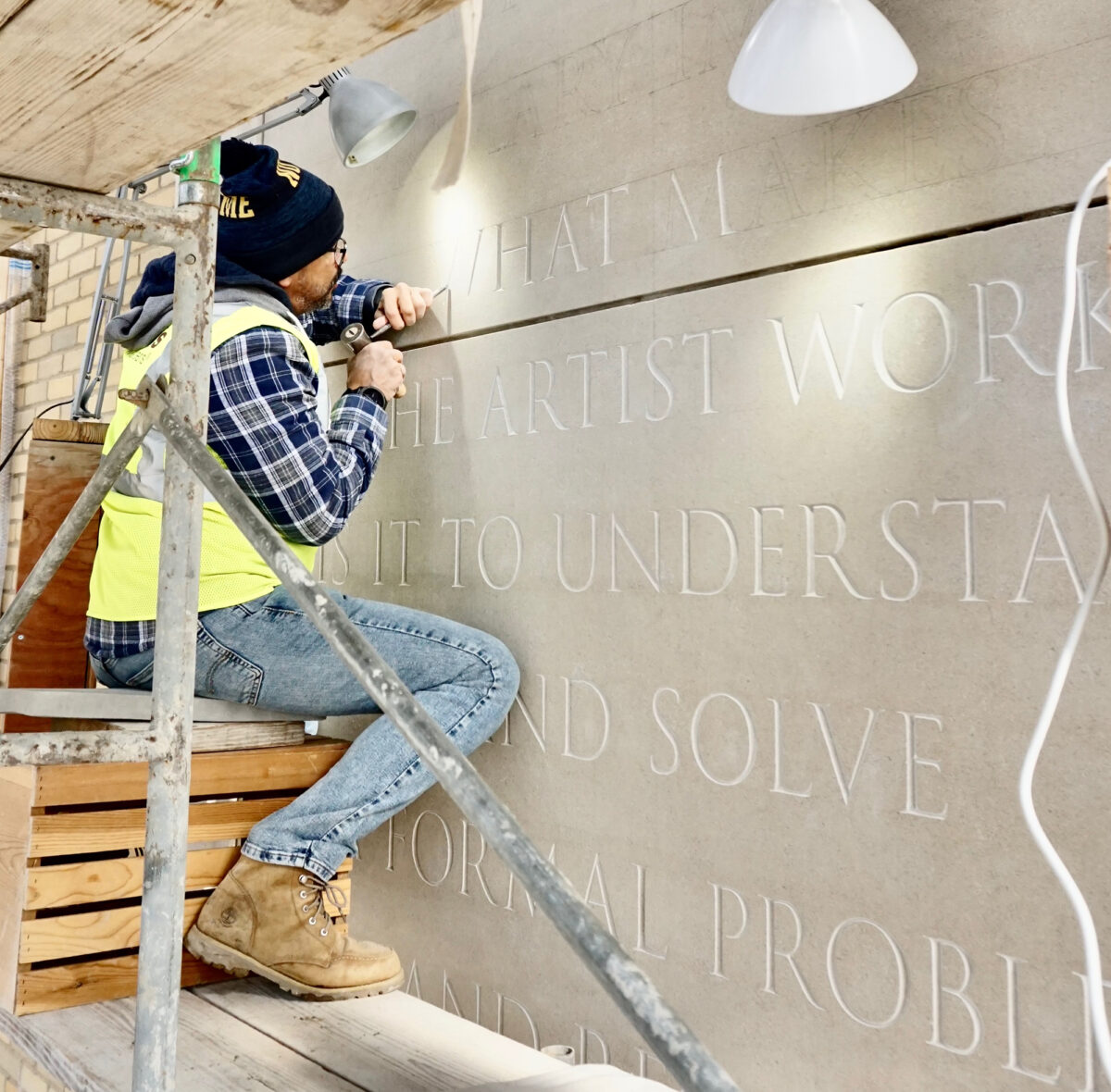
Working alongside experienced carvers under the direction of Adam Heller reinforced the importance of precision, consistency, coordination, and respect for the artistic intention of a larger project.
These experiences also deepened my understanding of lettering as an architectural element.
An inscription is not necessarily an ornament applied to a finished structure. When considered during the design process, it can participate in the architectural composition itself, much like other carefully proportioned elements of a building.
Its scale, placement, depth, and relationship to surrounding surfaces influence how the architecture is perceived.
A poem carved into a garden boulder is encountered differently from one printed on paper. Its physical surroundings become part of the reading experience. The texture of the stone, the changing light, and the scale of the inscription all contribute to how the words are perceived.
The same principles apply to residential inscriptions, even when their message is as simple as a house number or family name.
The scale may change, but the underlying discipline remains.
AN INVITATION TO COLLABORATE
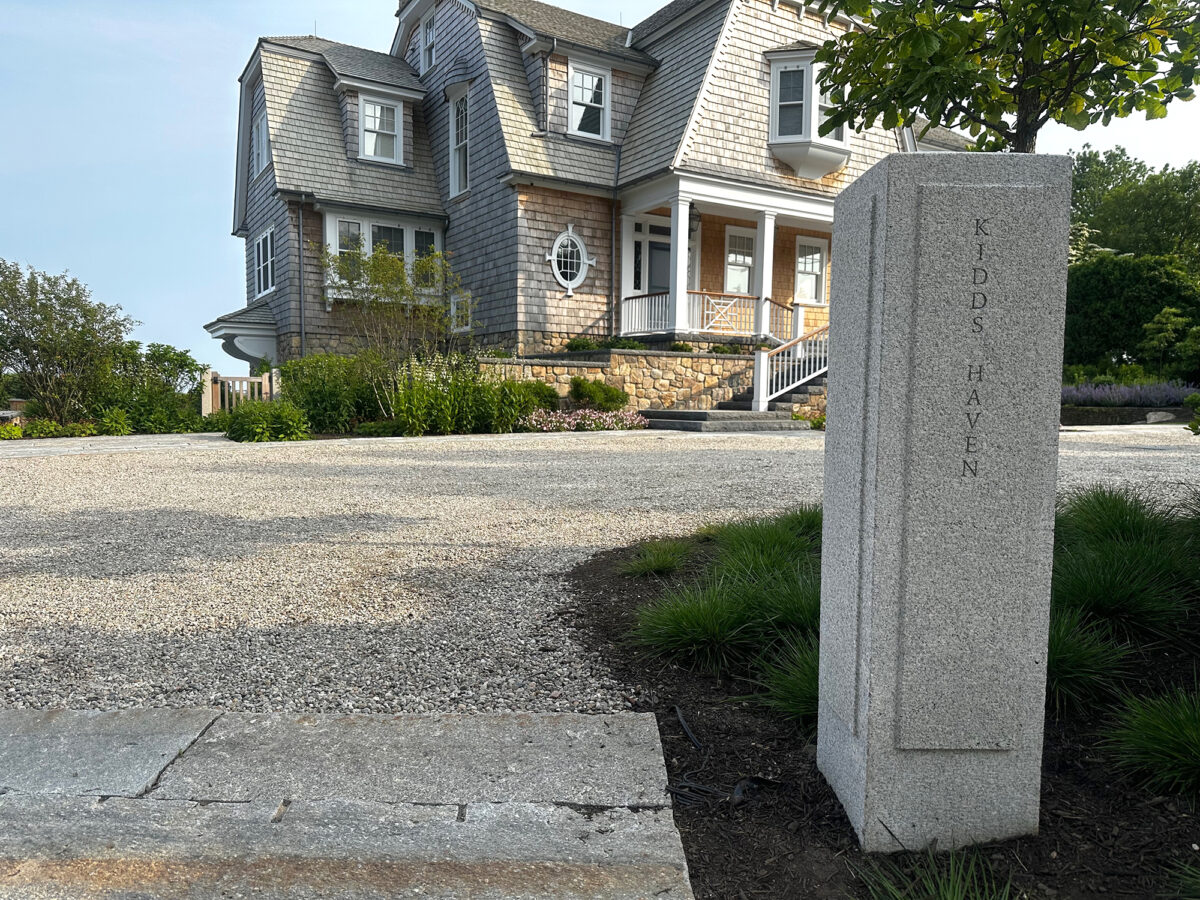
Architectural inscriptions are most successful when considered as part of the design rather than introduced as an afterthought.
Early collaboration with architects, landscape designers, builders, and homeowners allows us to evaluate suitable stone, lettering proportions, visibility, surface preparation, and the practical requirements of carving.
The same approach extends to estate markers, garden inscriptions, commemorative works, architectural walls, and public spaces. For me, the appeal of this work lies in its permanence and intentionality.
A natural stone is already complete in its own right. Carving does not improve its existence or erase its history. It introduces another layer: a human mark that gives the stone a new relationship with the people and place around it.
When I carve lettering into a natural boulder, I feel that I am participating in its continuing story.
The stone retains its identity, but its presence now serves an additional purpose. It communicates something about the people who inhabit the property and the place they call home.
That is what makes site-specific lettering meaningful to me: the relationship between material, design, and place cannot be separated.
Photography and process documentation by Javier R. Alfonzo, Sente Stoneworks © 2026
ARCHITECTURAL LETTERING & SITE-SPECIFIC COMMISSIONS
SENTE Stoneworks creates hand-carved architectural inscriptions, custom house numbers, estate markers, and sculptural works in stone and bronze.
Whether incorporated into an existing landscape or developed as part of a new architectural project, each commission begins with a conversation about material, place, and purpose.